What to do and see in Arequipa?
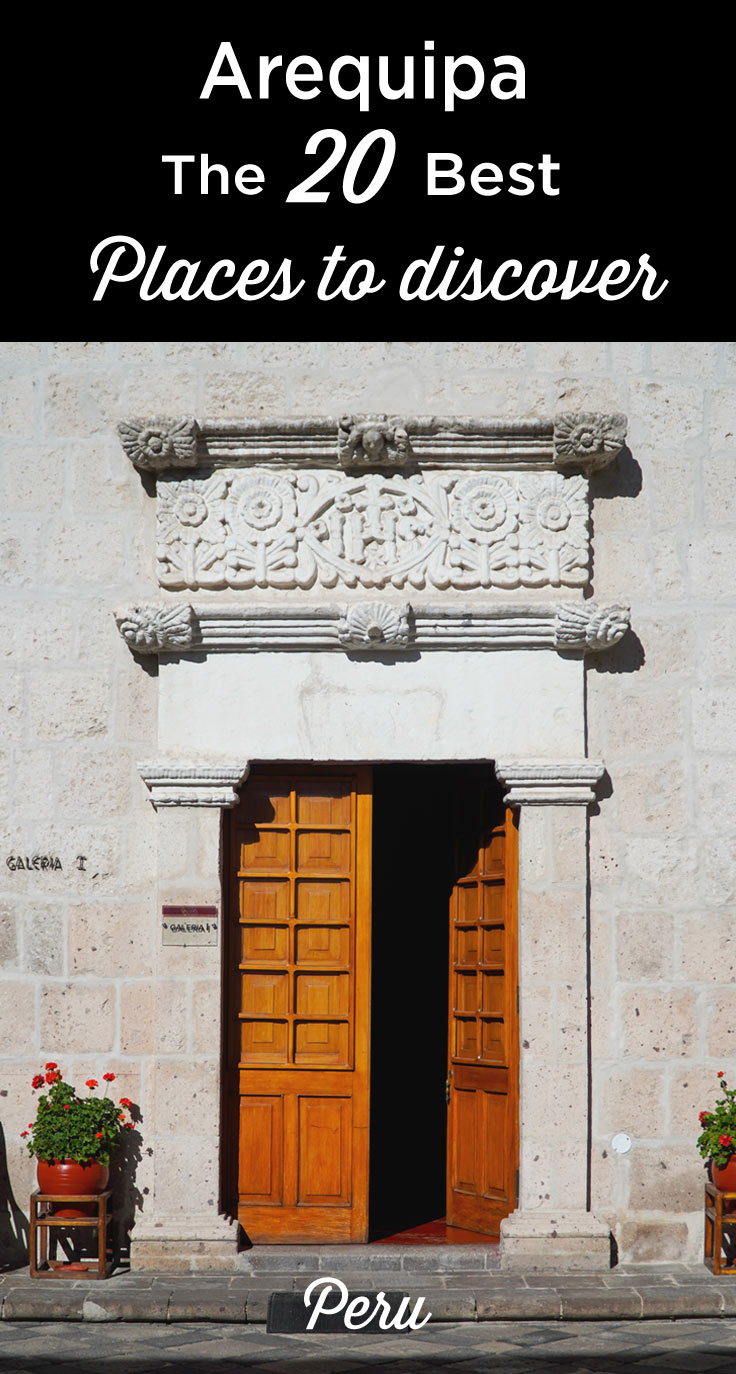
Visiting Arequipa means discovering one of Peru’s most beautiful cities, which has preserved its colonial charm with its magnificent buildings constructed from white volcanic stone, its traditional squares, and its narrow streets.
It’s also the starting point for excursions to the Colca Canyon, the second-deepest canyon in the world—another must-see in Peru!
So you don’t miss a thing during your visit, here’s my complete guide to what’s known as “the white city,” featuring all the places to visit and activities to do in Arequipa, as well as my restaurant and hotel recommendations for every budget.
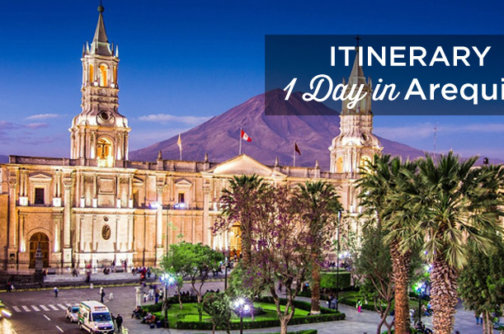
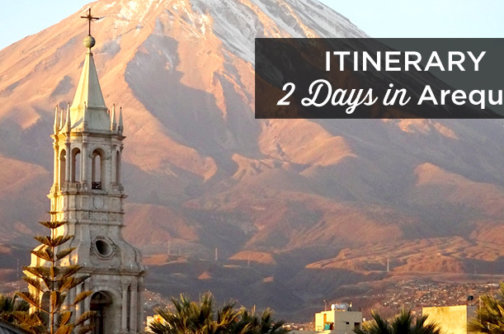
I also invite you to check out my article on visiting Arequipa in 2 days with a detailed itinerary and my tips for making the most of it.
So, what to do and see in Arequipa? Where to stay?
Sommaire
- What to do and see in Arequipa?
- 1. The Plaza de Armas
- 2. The Cathedral
- 3. Church of La Compañía
- 4. Convent of Santa Catalina
- 5. Mundo Alpaca and the Amano Museum
- 7. The San Camilo Market
- 8. The La Recoleta Convent Museum
- 9. The Yanahuara Viewpoint
- 10. Watch the sunset with a hot chocolate at Mi K’cao
- 11. The UNSA Cultural Center (Casa Arróspide)
- 12. The Sillar Route
- 13. The Santuarios Andinos Museum and the mummy of Juanita
- 14. Enjoy Arequipa’s cuisine at a picantería
- 15. Take a trip to the Colca Canyon
- 16. Take a trip to Salinas Lagoon
- 17. The Pillones Waterfalls
- 18. Take a trip to the Misti Volcano
- 19. Discover the Chilina Valley by ATV or rock climbing
- 20. Pisco and wine tasting in the Majes Valley
- 21. Hiking in the Colca Canyon
- 22. Climb the Chachani Volcano
- 23. Take a culinary tour
- 24. The Sabandía Mill
- How many days do you need to visit Arequipa?
- Where to stay in Arequipa?
- Where to eat and drink in Arequipa?
- How to get to Arequipa?
- Frequently Asked Questions – Visiting Arequipa
- Visiting Arequipa: My Opinion
- Rent a Car in Peru
- Traveling to Peru? These articles will help you!
1. The Plaza de Armas
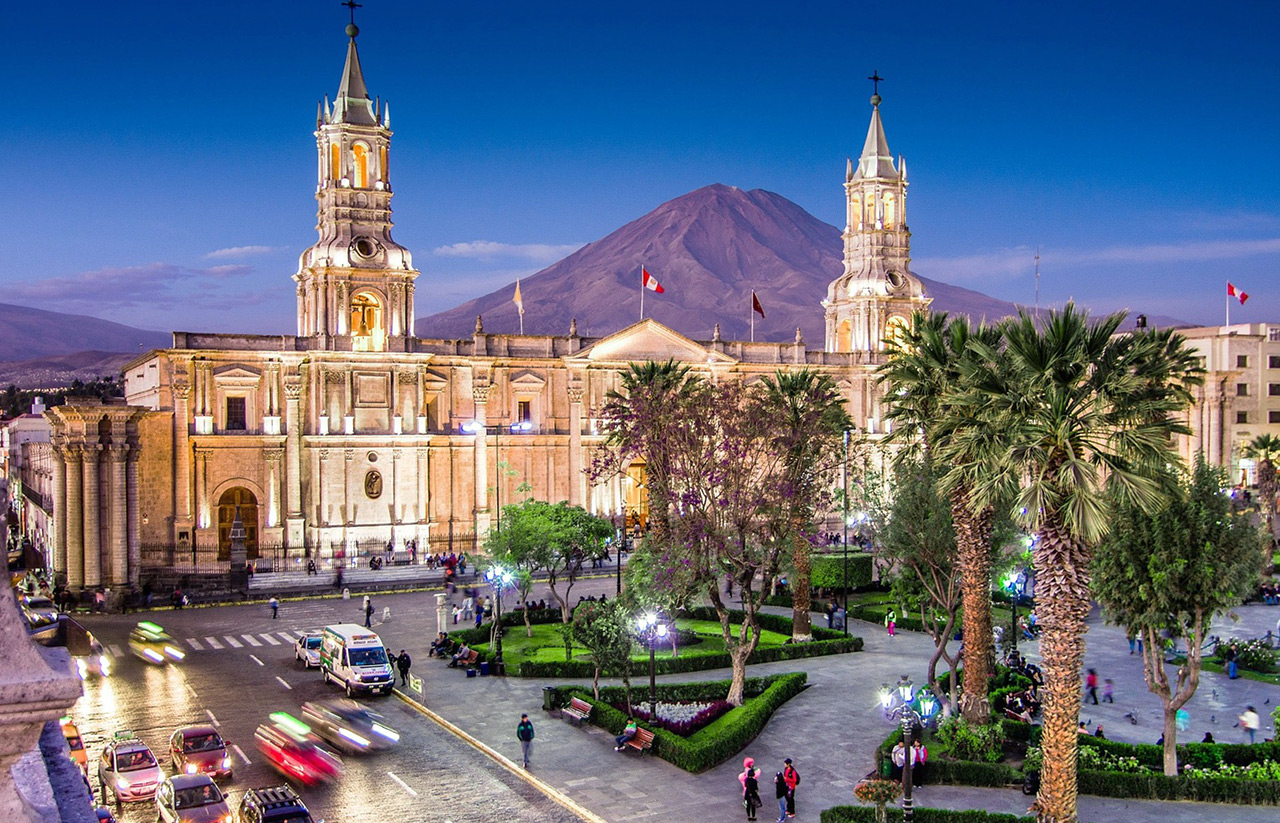
As in all major Latin American cities, the Plaza de Armas is the heart of the city.
Many even say it’s the most beautiful square in Peru, with its lively crowds, palm trees, and central fountain.
It’s surrounded by the cathedral,the Church of La Compañía, and three streets lined with buildings featuring colonial arcades.
2. The Cathedral
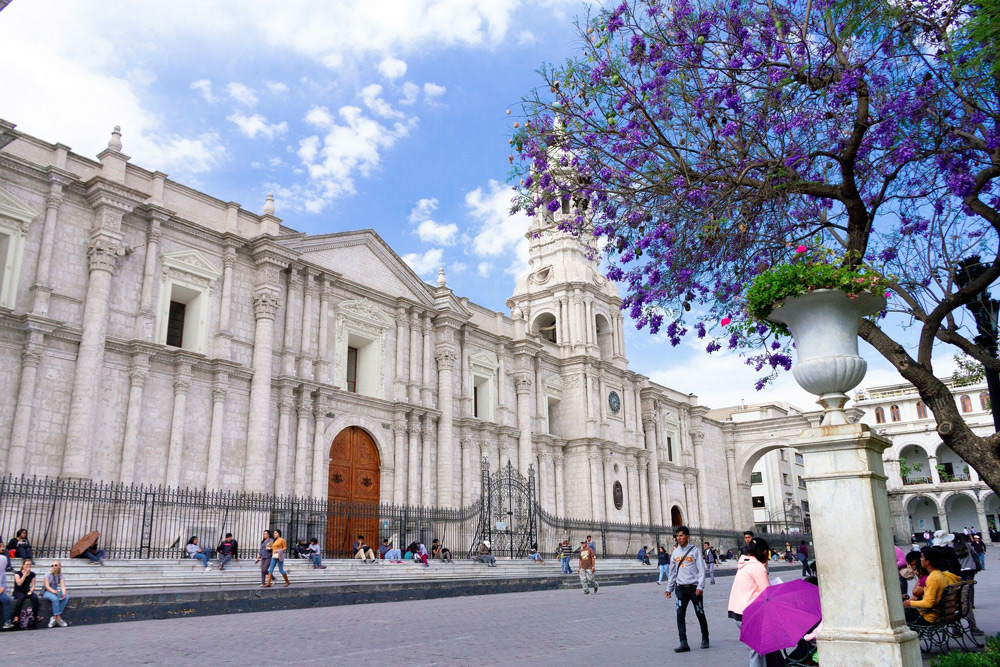
The Cathedral of Arequipa was originally built in 1612, but after suffering severe damage from multiple earthquakes and fires over the centuries, it was largely rebuilt during the 19th century.
It is a neoclassical building that houses an imposing Belgian organ (one of the largest in South America!), a large chandelier from Seville, a main altar made of Carrara marble, and a remarkable pulpit carved from wood by the Frenchman Charles Buisine-Rigot.
The guided tour includes the cathedral, the museum showcasing 400 years of history, and access to the bell tower, where you can enjoy one of the best views of the city!
Cathedral Tour
- Guided tour: 10 soles (adults), 3.50 soles (students)
- Hours: Monday through Saturday from 7:00 AM to 11:30 AM and from 5:00 PM to 7:30 PM; Sundays from 7:00 AM to 1:00 PM and from 5:00 PM to 7:00 PM
3. Church of La Compañía
On the corner of the main square stands the Church of La Compañía, founded by the Jesuits, which is a magnificent exampleof mestizo Baroque architecture.
In fact, both Christian and Inca symbolism can be observed: among other things, you can see Christian angels conversing with figures from Inca mythology!
Inside, you can see several altarpieces carved from wood and covered in gold leaf.
In the sacristy is the Chapel of San Ignacio (5 soles), entirely covered in frescoes depicting tropical flora and fauna.
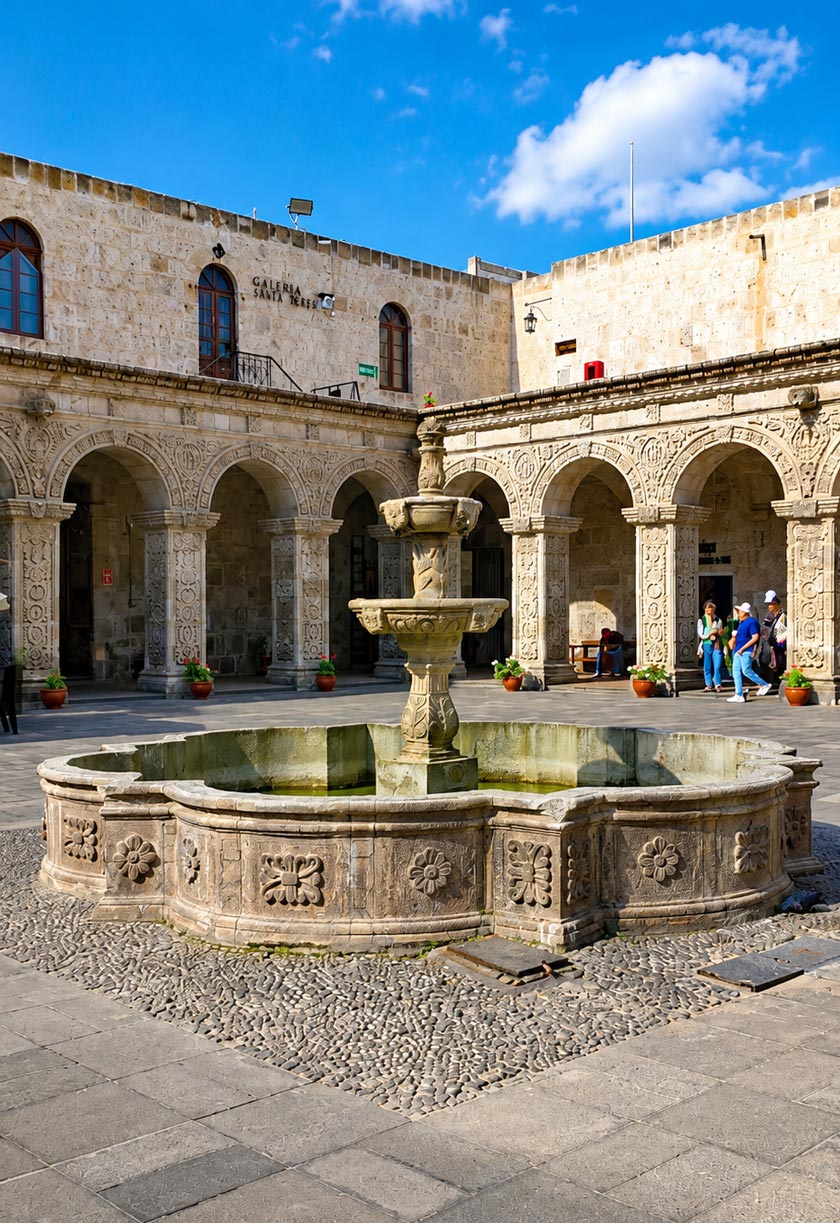
You can also visit the beautiful cloister built of volcanic stone. From there, climb the stairs to the upper gallery, which offers beautiful views of Arequipa.
A little tip: go at sunset—the light is magnificent!
Visit the Church of La Compañía
- Admission: free
- Address: Calle Álvarez Thomas
- Hours: 9:00 AM–12:00 PM, 3:00 PM–6:00 PM
- In the cloister, you’ll find a lovely café and La Benita de los Claustros (opens at 12:00), a nice little restaurant
4. Convent of Santa Catalina
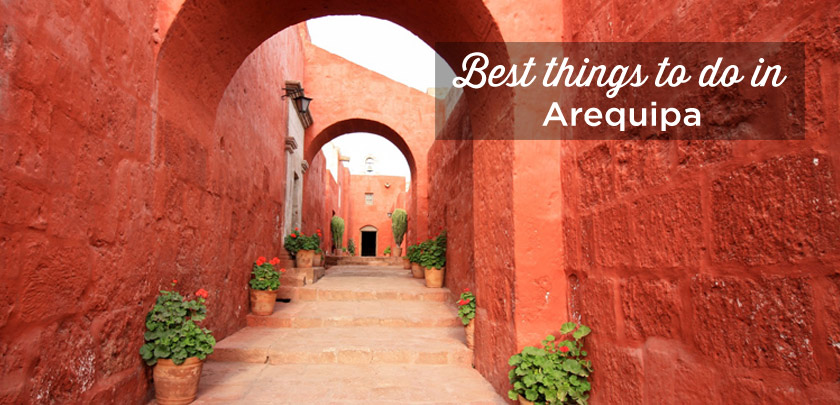
For me, the Convent of Santa Catalina is the most beautiful and must-see place in Arequipa.
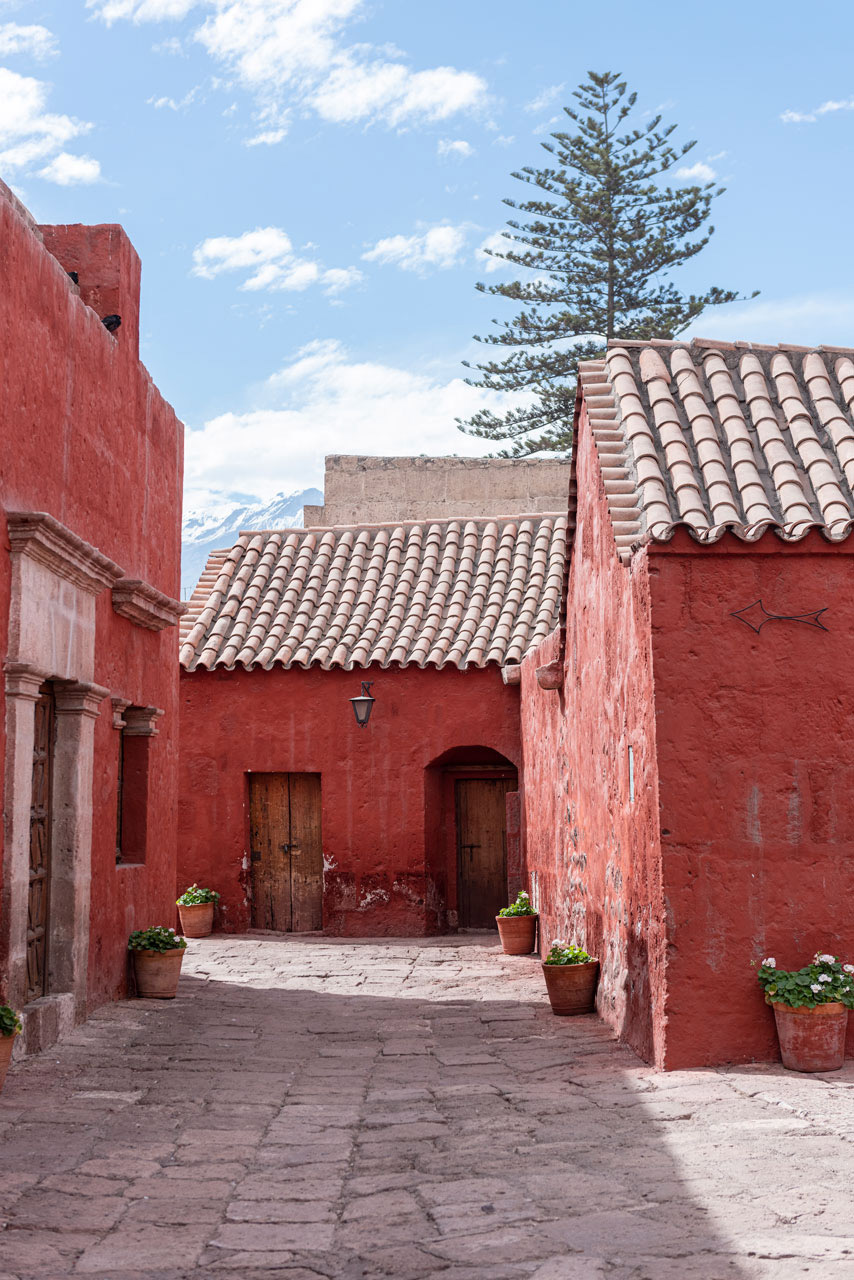
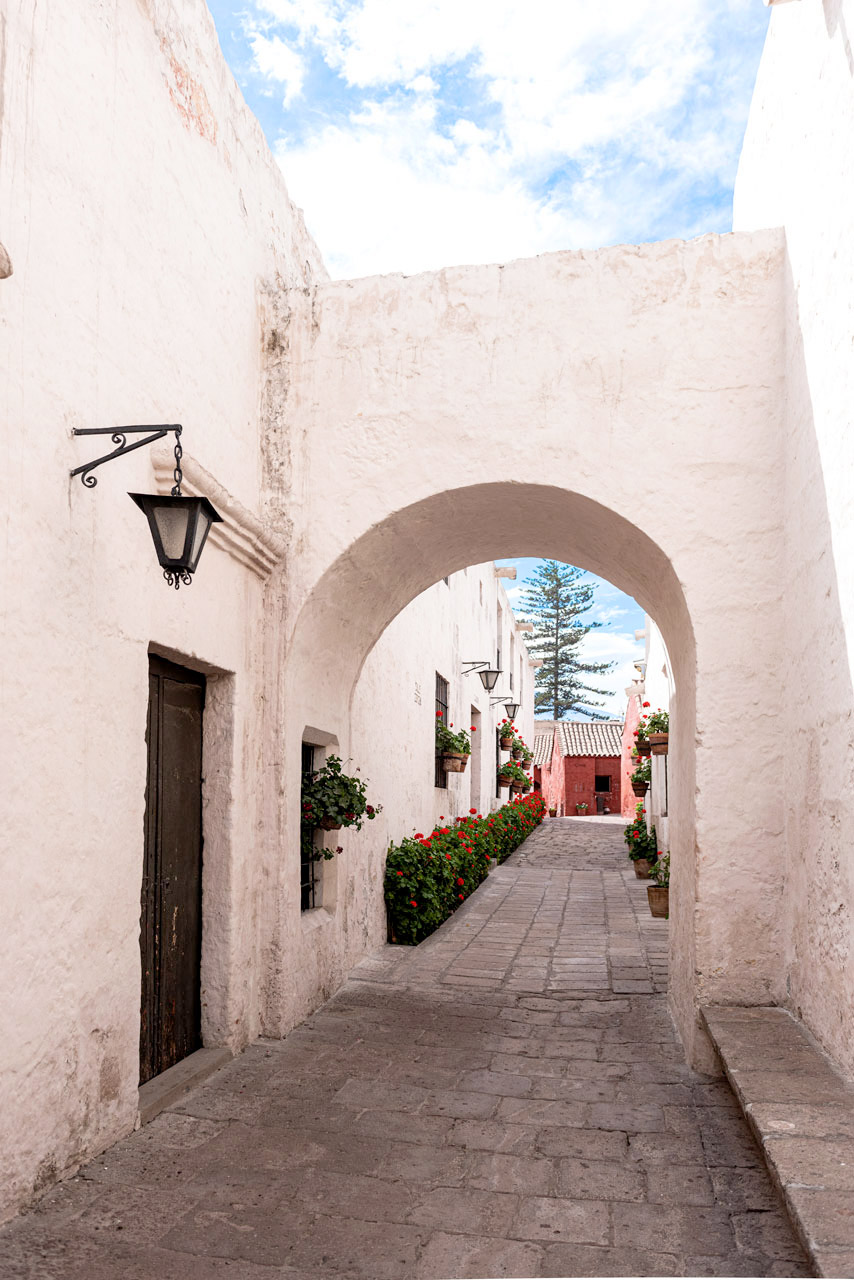
It’s not just a simple convent: it’s so large that it’s atrue “city within a city,”with its narrow streets, small plazas, fountains, gardens, and numerous white, red, and blue buildings.
At its peak, the Monastery of Santa Catalina housed up to 500 nuns from wealthy families.
Life here was neither minimalist nor lived in poverty: each nun had maids and ate from porcelain plates with silver cutlery. They also organized parties to which they invited musicians.
Eventually, Pope Pius IX learned of this “inappropriate” lifestyle and banned it in 1871. After being an inaccessible cloister for nearly 400 years, it opened to the public in 1970.
- To get the best photos, I suggest you go early in the morning, when there are few visitors.
Visit to the Monastery of Santa Catalina
- Admission: 45 soles for adults, 20 soles for students (under 21), guide about 20 soles plus tip.
- Address: Calle Santa Catalina, 301, Arequipa
- Hours: daily from 9:00 AM to 6:00 PM (last admission at 5:00 PM).
- Option to visit the convent at night with candles illuminating the space and creating a unique atmosphere (Thursdays from 5:30 PM to 8:30 PM, last entry at 7:30 PM, except in January, February, and March).
A great option is this guided tour of Arequipa that includes the Santa Catalina Monastery, which combines the historic center and the convent.
5. Mundo Alpaca and the Amano Museum
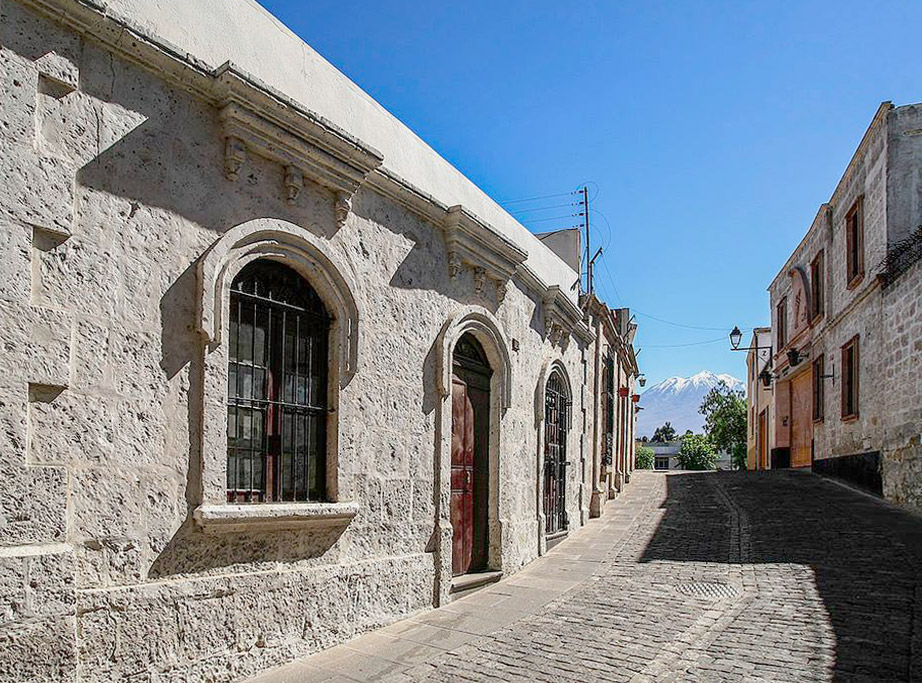
If you want to learn more about Peru’s famous alpacas and llamas, I recommend visiting Mundo Alpaca, a free attraction located in a beautiful colonial building made of white sillar stone.
There, you can see different species of Andean camelids, understand the differences between alpacas, llamas, vicuñas, and guanacos, and discover alpaca textile work, which is very important in Peruvian culture.
The place is especially pleasant thanks to its colonial courtyards and its atmosphere, which is much quieter than that of the streets surrounding the Plaza de Armas.
But above all, don’t miss the Amano-Michell Pre-Columbian Textile Museum, located right below and which many visitors completely overlook.
The museum is also free and features a beautiful collection of pre-Columbian textiles dating back over 2,500 years, primarily from the Paracas, Nazca, Wari, Chancay, and Siguas cultures.
It’s a very interesting visit to better understand the importance of textiles in Andean civilizations, long before the arrival of the Spanish.
- Admission: free
- Address: Óvalo San Lázaro, Arequipa
7. The San Camilo Market
If you want to discover the more local side of Arequipa, I recommend stopping by the San Camilo Market.
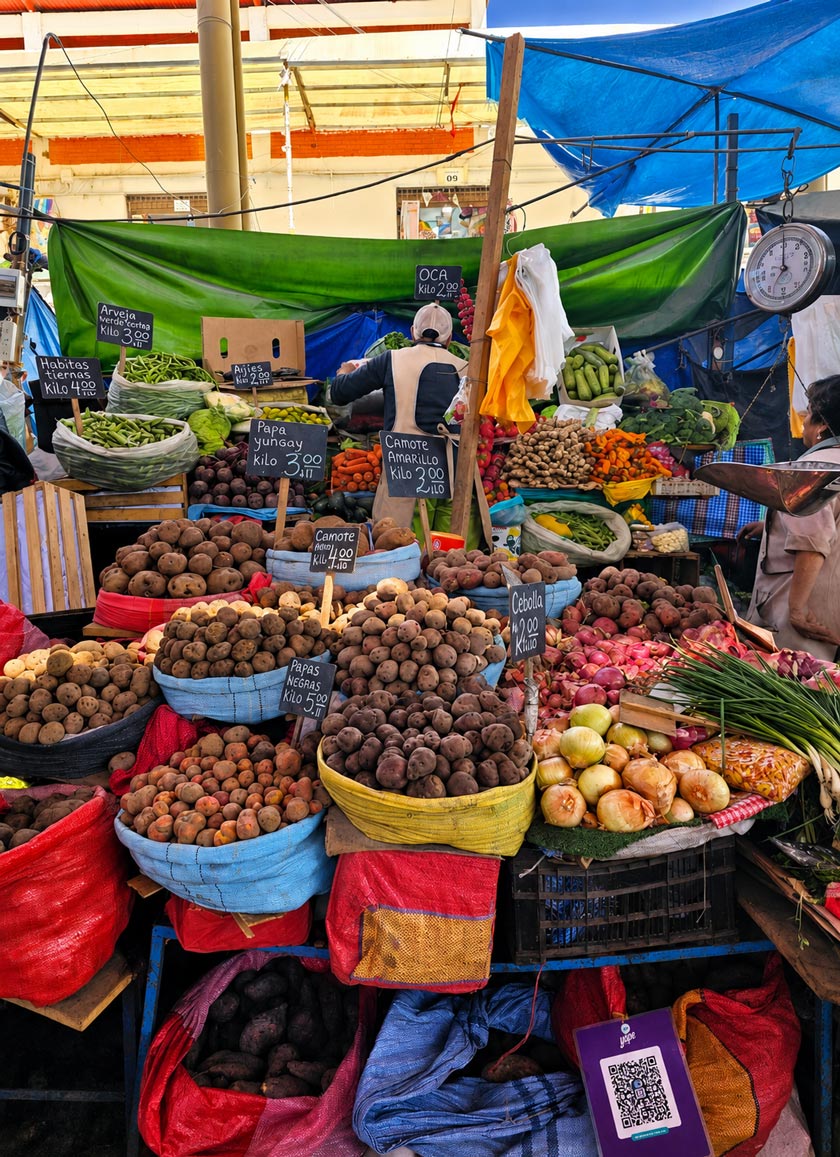
It’s the city’s most famous market and probably one of the best places to see locals going about their daily lives, try local specialties, or simply soak up the atmosphere.
The building itself is worth a visit, with its large metal structure attributed to Gustave Eiffel’s workshops.
Inside, there’s a little bit of everything: fruit, fresh juices, medicinal herbs, cheeses, spices, meat, flowers, Andean products, and small, popular restaurants.
It’s also an ideal place to try various Arequipa specialties at a good price, such as stuffed rocoto peppers, Arequipa-style adobo, or different freshly made juices.
I especially recommend going in the morning, when the market is liveliest.
- Address: Calle Perú 313, Arequipa
- Hours: Daily from 6:00 AM to 6:00 PM
8. The La Recoleta Convent Museum
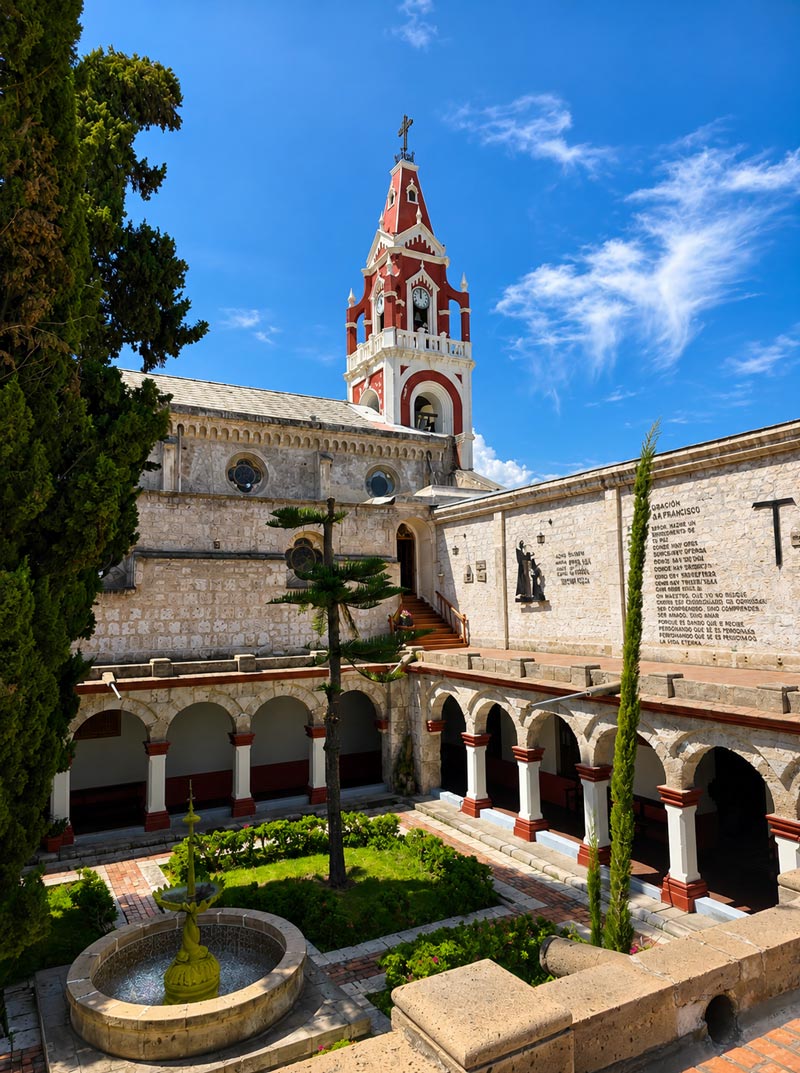
Located across the Chili River, the La Recoleta Convent Museum is one of Arequipa’s most surprising attractions.
Founded by the Franciscans in the17th century, the site is now a blend of convent, museum, ancient library, and collections brought back from religious missions in the Amazon.
You can visit several rooms displaying Amazonian artifacts, religious artworks, pre-Hispanic pieces, and even a few mummies.
The museum may seem a bit disorganized at times, but that is precisely what makes it fascinating. You go from a room full of pre-Columbian artifacts to a vast ancient library with works that sometimes date back several centuries.
In fact, the monastery houses over 20,000 antique books, making it one of the most important religious libraries in Peru.
I also recommend climbing up to the small bell tower-viewpoint, which offers beautiful views of Arequipa and the Misti volcano.
The neighborhood surrounding La Recoleta is also pleasant for a stroll, with a much quieter atmosphere than the historic center.
- Address: Calle Recoleta 117, Yanahuara
- Hours: Monday through Saturday, 9:00 AM to 1:30 PM and 2:30 PM to 5:00 PM
9. The Yanahuara Viewpoint
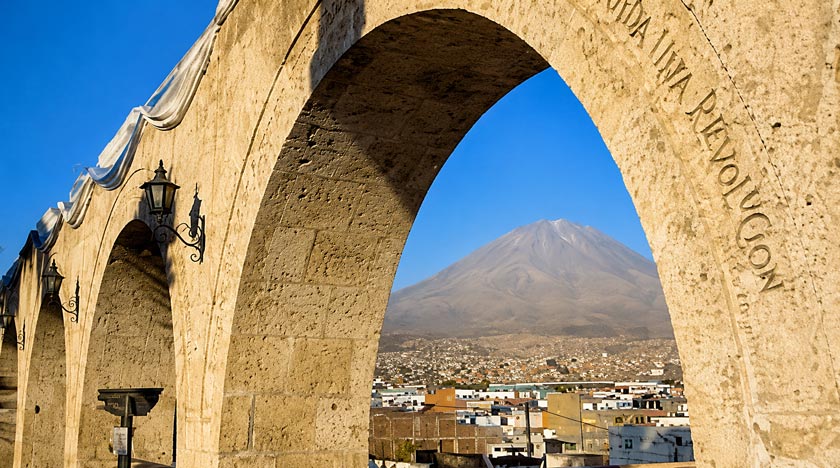
The Yanahuara Viewpoint is probably the most famous viewpoint in Arequipa.
From the famous white ashlar arches, you can enjoy beautiful views of the Misti and Chachani volcanoes and, sometimes, Pichu Pichu when the sky is clear.
The Yanahuara neighborhood is also worth taking some time to stroll through. With its cobblestone alleys, colonial houses, and flower-filled courtyards, the atmosphere is much more peaceful than in the historic center.
The viewpoint fills up with people at sunset, both tourists and locals.
Still, I recommend going early in the morning or late in the afternoon to avoid the crowds and enjoy better light for photos.
- Admission: free
- Address: Plaza de Yanahuara, Arequipa
The views of the agricultural terraces, the valley, and the volcanoes surrounding Arequipa are magnificent, especially first thing in the morning or in the late afternoon.
The atmosphere is usually much quieter than at Yanahuara.
10. Watch the sunset with a hot chocolate at Mi K’cao
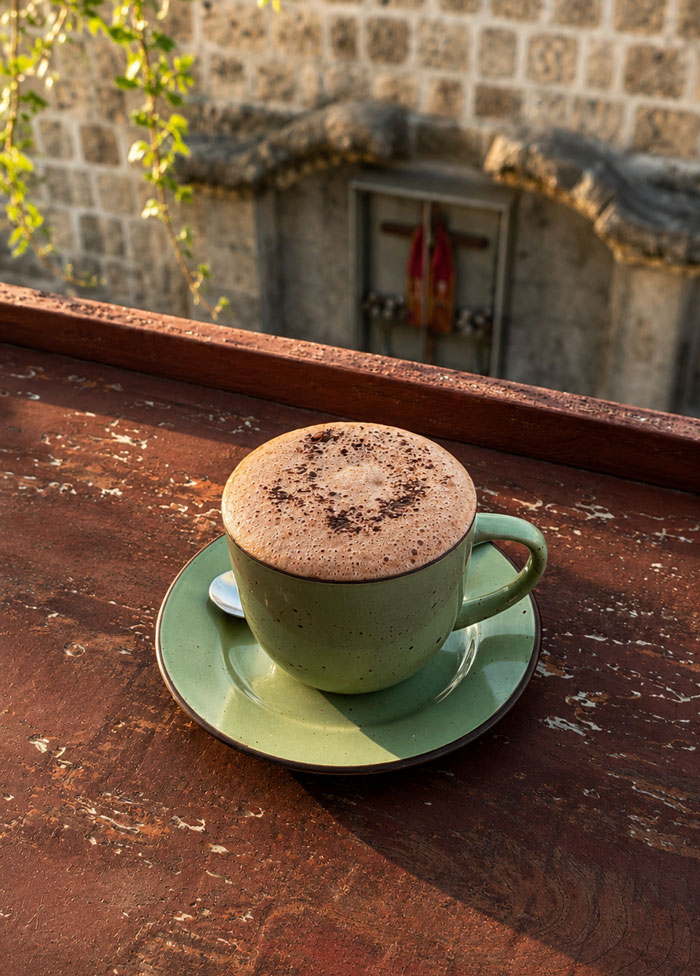
To watch a beautiful sunset in Arequipa with a hot drink, I highly recommend Mi K’cao Chocolates & Café Rooftop.
The café is a bit hidden: you have to ring the doorbell at the entrance and climb the stairs, as it’s on the rooftop of an inn right next to the Santa Catalina Monastery.
Once you’re up there, the views of the Misti and Chachani volcanoes are magnificent, especially at sunset.
They offer a great selection of artisanal hot chocolates made with organic cacao grown on the owner’s parents’ land.
They were so good that I tried two different kinds!
They also serve specialty coffee, cacao drinks, brunch, and several vegetarian or vegan options.
11. The UNSA Cultural Center (Casa Arróspide)
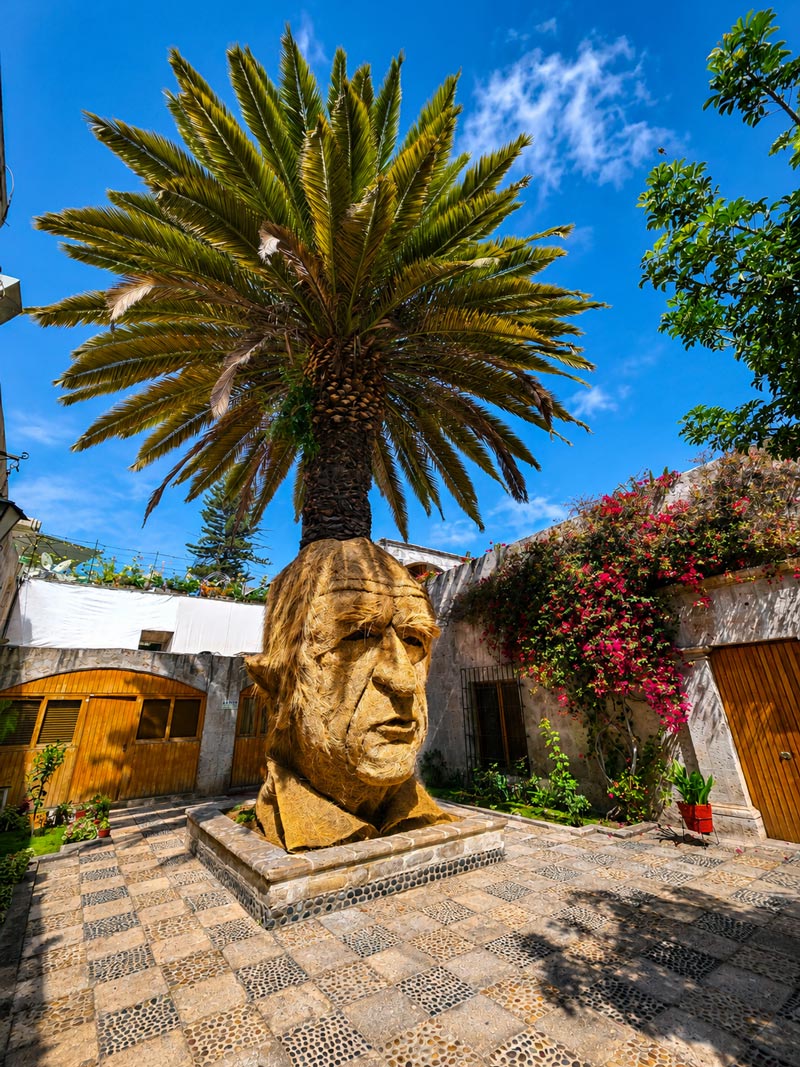
If you prefer places that are a bit quieter and less touristy, I also recommend stopping by the UNSA Cultural Center, located in the magnificent Casa Arróspide, also known as Casa Irriberry.
This former18th-century colonial mansion now hosts various artistic and cultural exhibitions in a beautiful white adobe building.
There you’ll find several exhibition halls, two lovely colonial courtyards, and a small, cozy café if you’d like to take a quiet break during your visit to Arequipa.
Since the place is still relatively unknown to travelers, the atmosphere is usually very peaceful.
Plus, admission is free, making it an excellent activity to enjoy in the historic center.
- Address: Calle Santa Catalina 101, Arequipa
- Admission: free
12. The Sillar Route
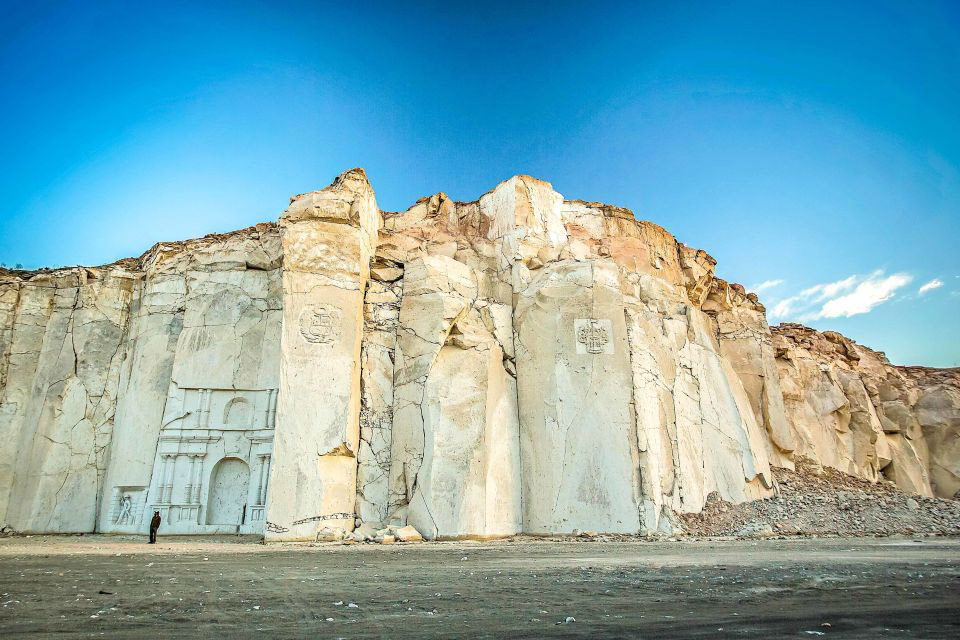
Sillar stone is everywhere in Arequipa. This white volcanic stone has been used to build most of the city’s historic buildings, to the point that today Arequipa is known as the “white city.”
But many travelers don’t know that you can see firsthand where this stone is quarried thanks to the Sillar Route, an excursion about 30 minutes from downtown.
There, you can explore several ancient quarries still in use today, featuring massive walls of sillar carved from the volcanic rock.
The most impressive site is probably the Quebrada de Culebrillas, a narrow canyon marked by petroglyphs and ancient passages used by various pre-Hispanic cultures.
It’s also an excellent way to better understand why Arequipa’s architecture is so different from the rest of Peru.
Most travelers choose to explore the Sillar Route on an organized tour from Arequipa, which makes it much easier to visit the different quarries and the Quebrada de Culebrillas!
- The tour includes transportation, a guide, and several stops, such as theAñashuayco quarry, the Culebrillas petroglyphs, and various viewpoints of the volcanoes surrounding Arequipa.
From downtown Arequipa, take a bus past the Grau Bridge heading toward Cono Norte-Yura and get off at the Curva stop, near the Plaza Norte shopping center.
Across the street, you can take another bus or a taxi to the La Cruz area.
From there, it’s a 10- to 15-minute walk to the entrance of the Sillar Trail.
Expenses to consider once you’re there:
- Entrance fee to the Añashuayco quarries: between 5 and 10 soles, depending on the areas you visit
- Entrance fee to the Quebrada de Culebrillas: 5 soles
- Public transportation: about 1 sol each way by minibus
13. The Santuarios Andinos Museum and the mummy of Juanita
The Santuarios Andinos Museum is probably the best-known museum in Arequipa, mainly thanks to the famous mummy of Juanita.
Discovered in 1995 on the Ampato volcano, at an altitude of over 19,700 ft, Juanita is a young Inca girl sacrificed over 500 years ago during a religious ritual called capacocha.
Thanks to the extreme cold of the Andes, her body has been extraordinarily well-preserved, making her one of Peru’s most important archaeological finds.
The visit also allows you to learn more about Inca beliefs, religious ceremonies in the high mountains, and the archaeological discoveries made around the volcanoes of southern Peru.
I highly recommend taking the guided tour, as the explanations are essential for understanding the historical and cultural context.
- Admission: about 25 soles
- Address: Calle La Merced 110, Arequipa
- Hours: Tuesday through Saturday, 9:00 AM to 6:00 PM

14. Enjoy Arequipa’s cuisine at a picantería
Arequipa’s cuisine is considered one of the best in Peru.
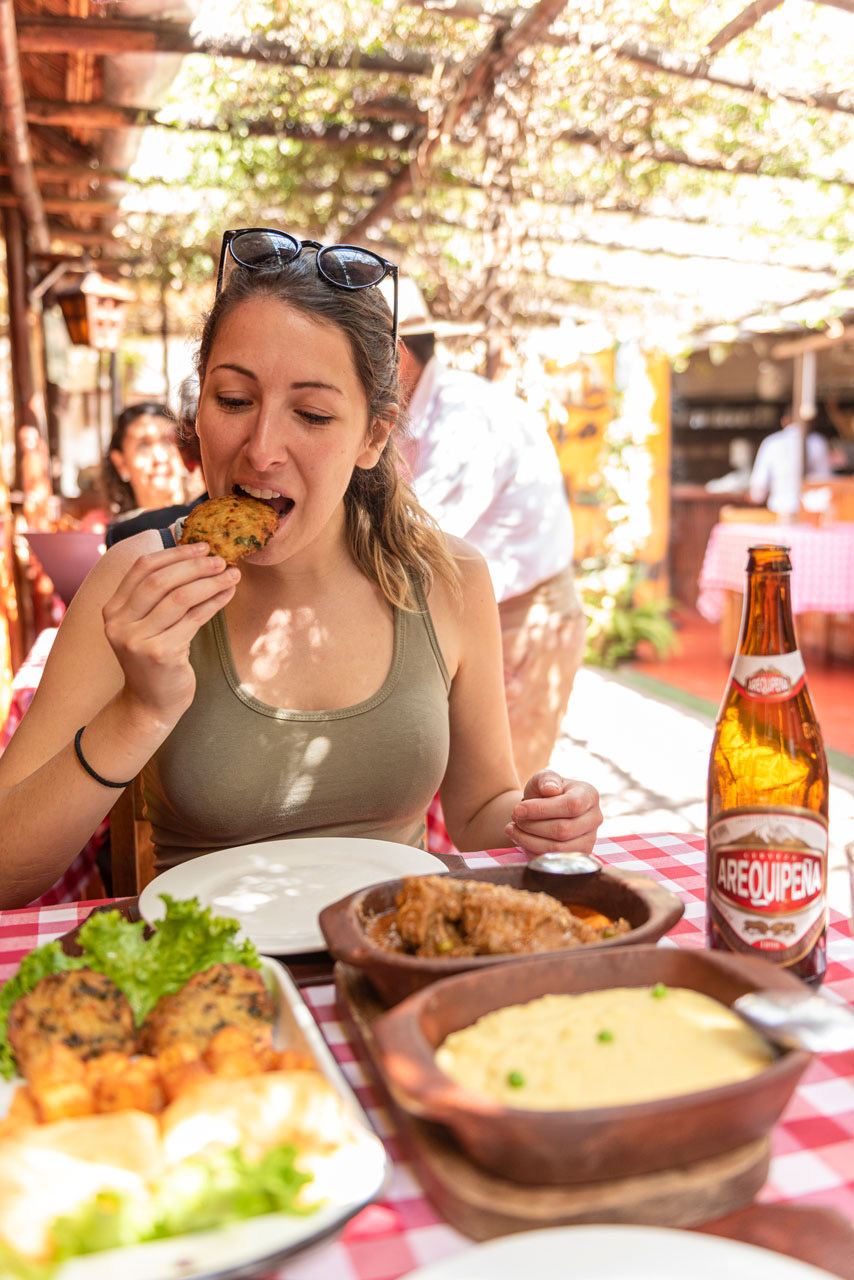
The city even has its own culinary tradition thanks to the famous picanterías, popular restaurants serving traditional dishes, often prepared according to very old recipes.
This is where you should try specialties like stuffed rocoto peppers, Arequipa-style adobo, solterito de queso, shrimp chupe, or ocopa.
Some picanterías still use traditional wood-fired ovens and prepare chicha de guiñapo, a fermented drink typical of Arequipa.
Although several restaurants in the historic center offer these dishes, I think the experience is much more interesting in an authentic picantería frequented by locals.
Among the best-known ones, you can check out La Nueva Palomino, Sol de Mayo, or La Capitana.

15. Take a trip to the Colca Canyon
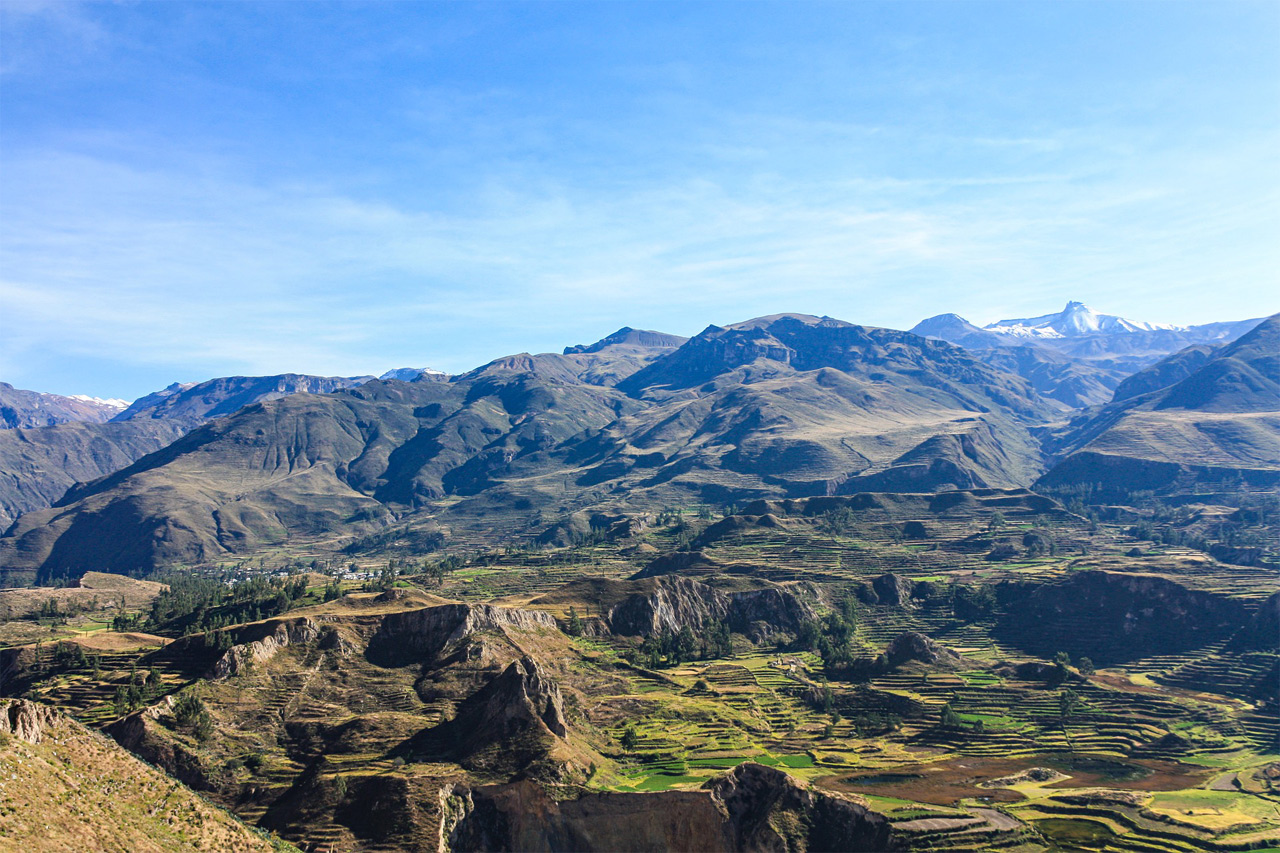
The Colca Canyon is the most famous excursion you can take from Arequipa, and for many travelers, it is even one of the highlights of a trip to Peru.
Located about a 3- to 4-hour drive away, the canyon is known for its spectacular landscapes, Andean villages, agricultural terraces, and, above all, the famous Andean condors.
The most famous spot is the Cruz del Cóndor, where you can often see condors soaring over the canyon in the early morning.
But Colca is more than just a viewpoint. The region also features traditional villages, hot springs, hiking trails, and several hotels with magnificent views of the mountains.
If you have time, I highly recommend spending at least one night there, as day trips are very long and quite exhausting.
- I also recommend reading my complete guide to the Colca Canyon to find out where to stay, which tours to choose, and how to organize your visit.
It includes transportation, a guide, several scenic stops, and condor watching.
16. Take a trip to Salinas Lagoon
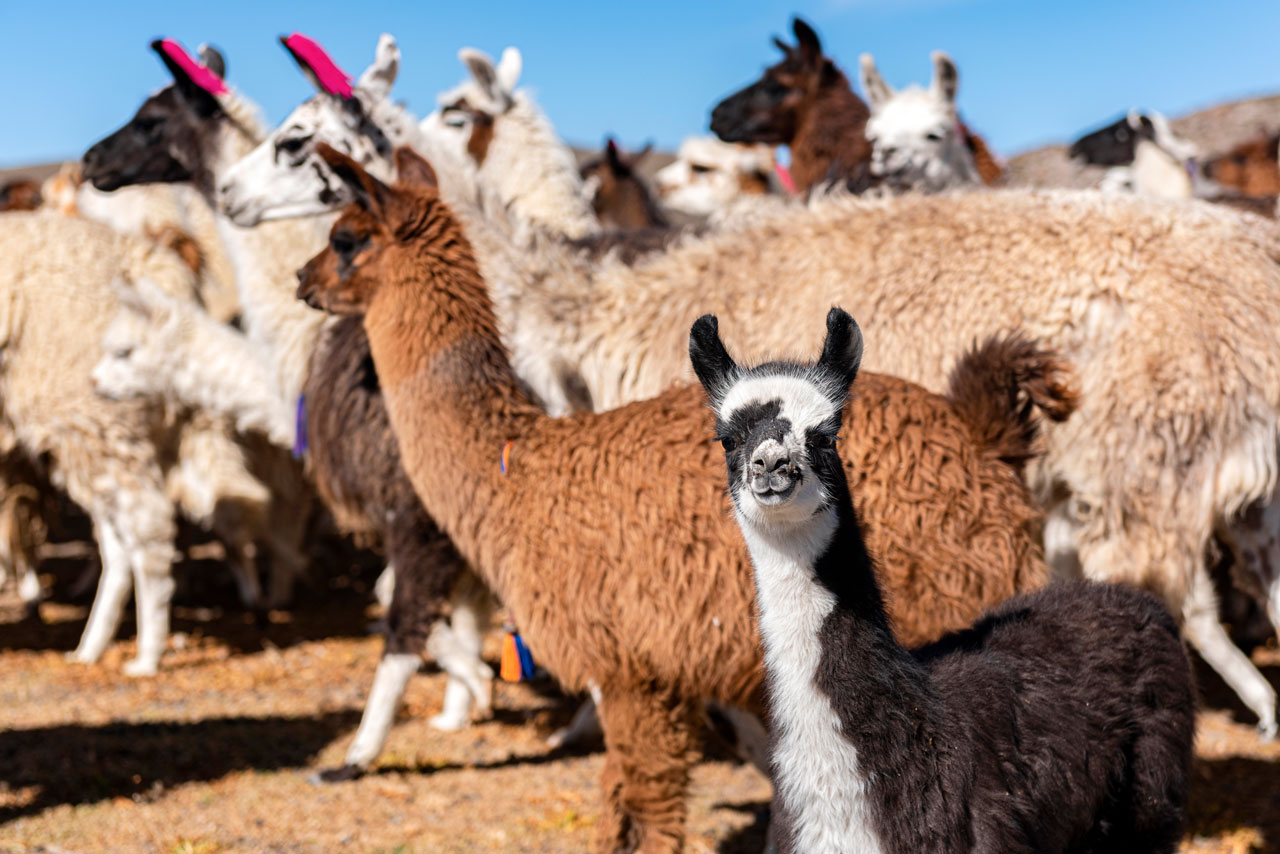
If you’re looking for a nature-focused excursion near Arequipa, I highly recommend Laguna de Salinas.
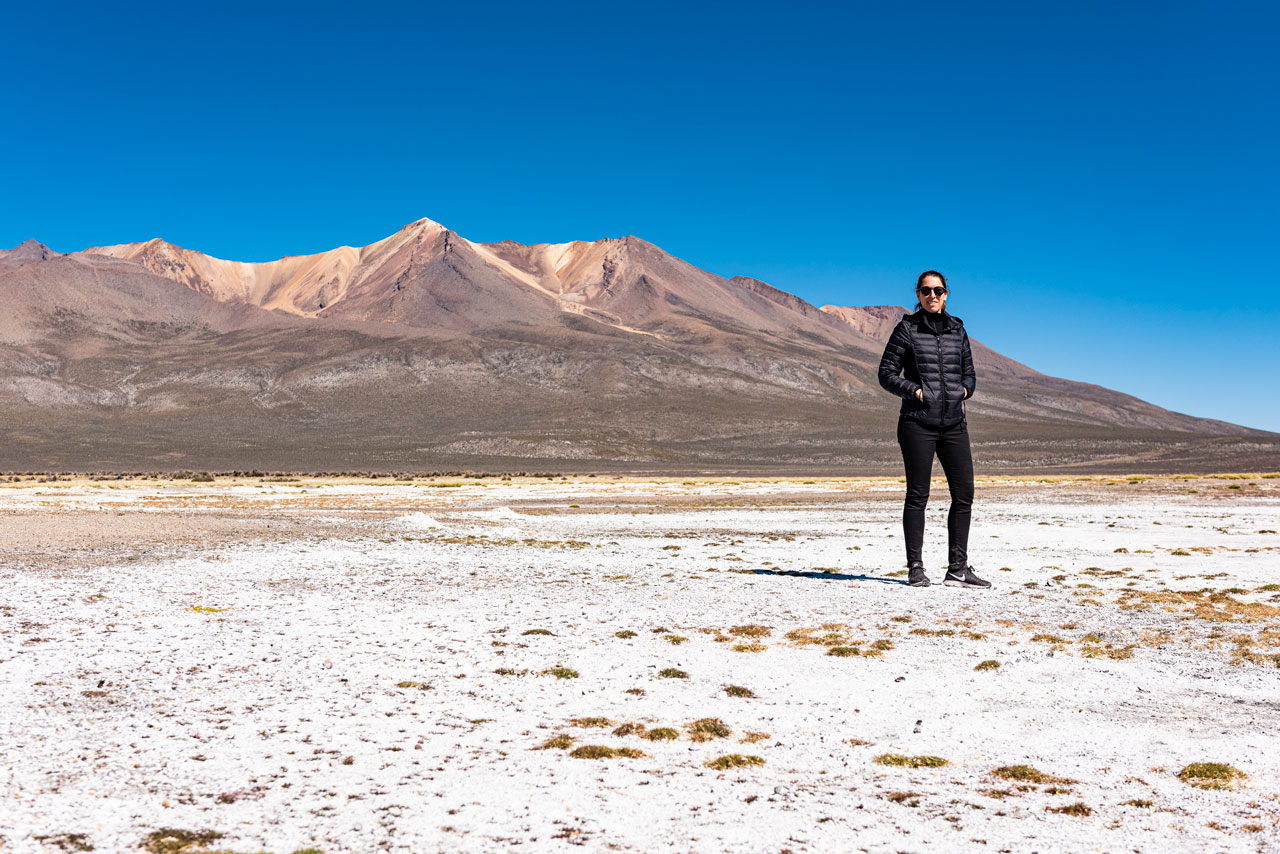
Located in the Salinas y Aguada Blanca National Reserve, this immense lagoon surrounded by volcanoes offers landscapes quite different from the rest of the region.
Depending on the season, the lagoon may be completely white and dry or covered by a thin layer of water that reflects the surrounding mountains.
It is also one of the best places near Arequipa to see vicuñas, flamingos, and other Andean animals.
The excursion typically passes through several small villages, volcanic landscapes, hot springs, and various viewpoints overlooking the region’s volcanoes.
Since the altitude is usually over 13100 ft, it’s best to avoid this tour right after arriving in Arequipa.
17. The Pillones Waterfalls
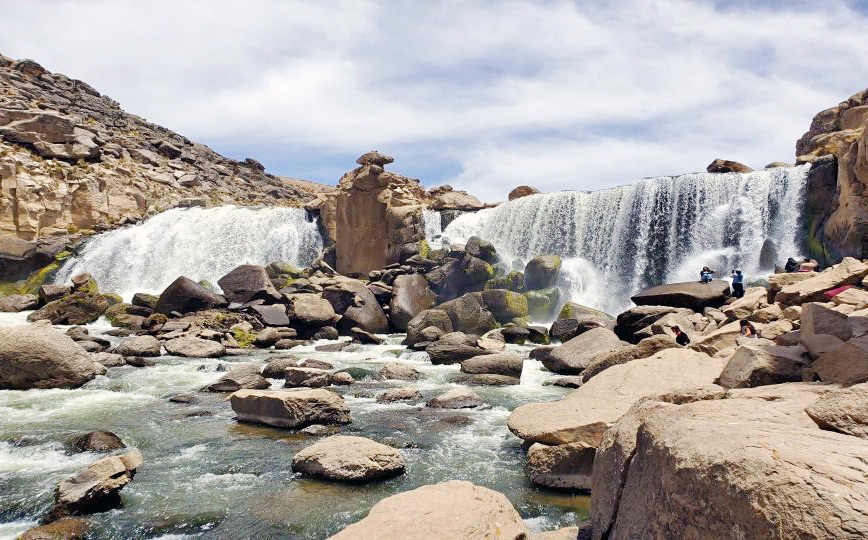
The Pillones Waterfalls have become one of the most popular nature excursions in the Arequipa area.
The site is best known for its rock formations naturally sculpted by water and wind, which sometimes give the impression of an almost lunar landscape.
After a short hike, you reach several small waterfalls surrounded by volcanic rocks and vegetation.
The excursion is often combined with a visit to the Puruña Stone Forest, another stunning landscape located in the same region.
Just like at Laguna de Salinas, the altitude is high and it can get very cold in the morning.
That’s why I recommend bringing warm clothes, even if it’s sunny in Arequipa when you set out.
18. Take a trip to the Misti Volcano
Misti is Arequipa’s most iconic volcano. It can be seen from almost anywhere in the city, its silhouette perfectly recognizable behind the white sillar buildings.
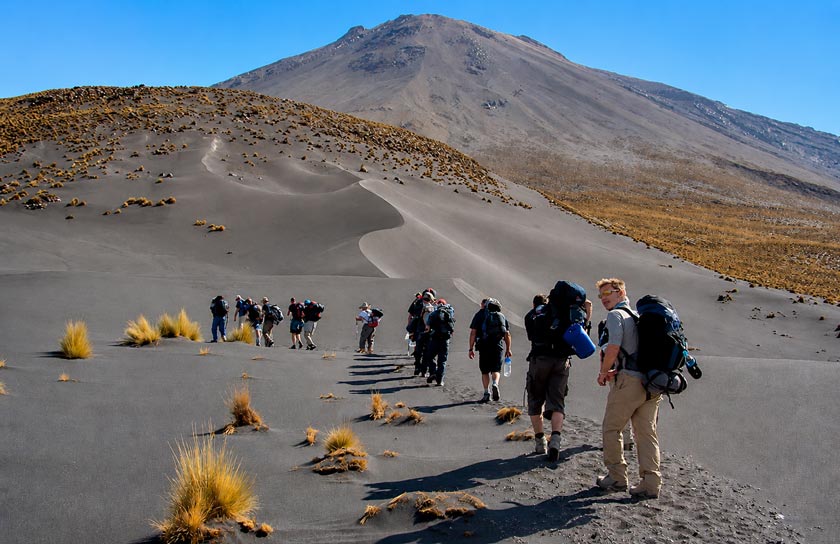
If you want to get closer, there are several options depending on your fitness level and the type of experience you’re looking for.
- Half-day tour of the slopes of Mount Misti: a good option if you want to explvore the volcano without doing the full ascent. The hike is still challenging due to the altitude, but it allows you to enjoy magnificent landscapes around Arequipa in just a few hours.
- 2-day, 1-night ascent of Misti Volcano: a true high-altitude adventure, with a night at base camp before the summit climb the following day. This option is reserved for travelers in good physical condition who are already well acclimated.
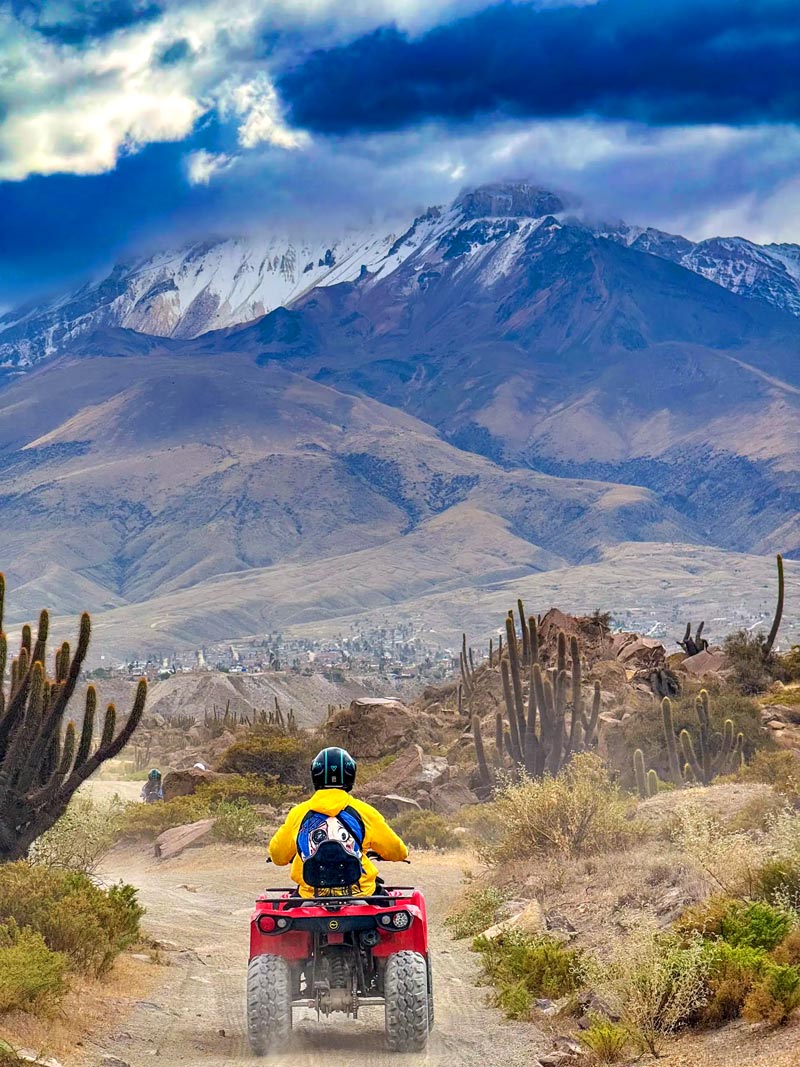
19. Discover the Chilina Valley by ATV or rock climbing
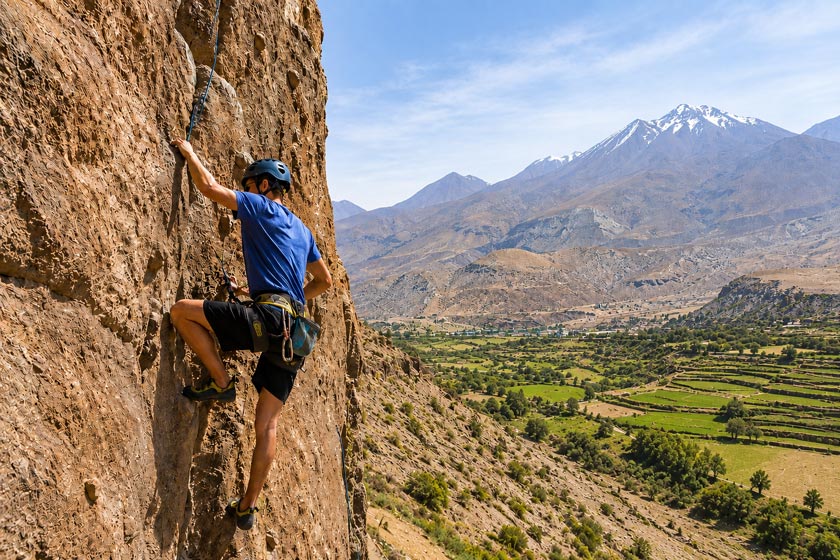
The Chilina Valley is one of the most beautiful natural areas around Arequipa, with lush green landscapes surrounded by volcanoes.
It’s also an excellent spot for slightly more adventurous activities without straying too far from the city.
You can explore the valley on a quad bike, a very popular way to discover the volcanic landscapes and viewpoints around Arequipa.
For travelers who enjoy more athletic activities, it’s also possibleto go rock climbing on the valley’s natural cliffs.
20. Pisco and wine tasting in the Majes Valley
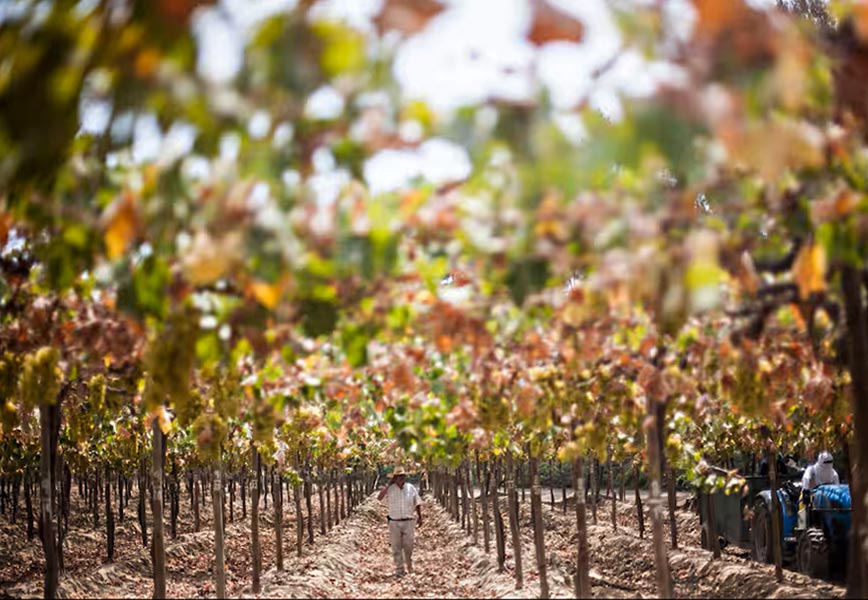
The Majes Valley, a few hours from Arequipa, is known for its desert landscapes, vineyards, and production of wine and, above all, pisco, Peru’s iconic spirit.
It is also a region of great importance for pre-Hispanic history thanks to the famous Toro Muerto petroglyphs, one of the largest rock art sites in the country.
This tour allows you to combine both: cultural discovery and tasting.
It typically begins with a visit to the Toro Muerto petroglyphs, before continuing on to several traditional wineries in the Majes Valley.
There, you’ll discover the different stages of wine and pisco production, the ancient stills used in the region, and various local varieties with tastings.
The tour usually includes transportation from Arequipa, a guide, tastings, and visits to the wineries.
21. Hiking in the Colca Canyon
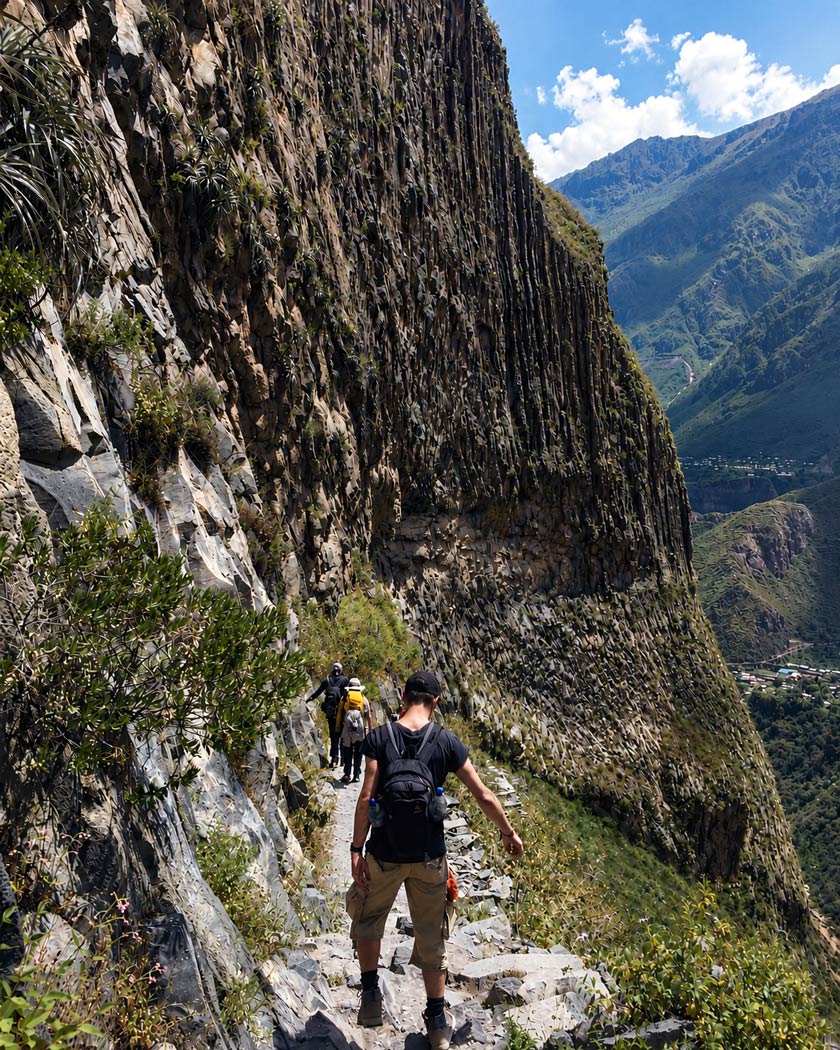
If you enjoy hiking, one of the best experiences near Arequipa is hiking through the Colca Canyon.
Some trails allow you to descend to the bottom of the canyon, all the way to the Sangalle oasis, surrounded by palm trees and natural pools.
The contrast between the desert landscapes, agricultural terraces, and small Andean villages makes the region particularly impressive.
Although some sections are challenging, there are several routes to choose from depending on your fitness level and the time you have available.
If you plan to go hiking in the Colca, I recommend that you acclimate well to the altitude before setting out.
22. Climb the Chachani Volcano
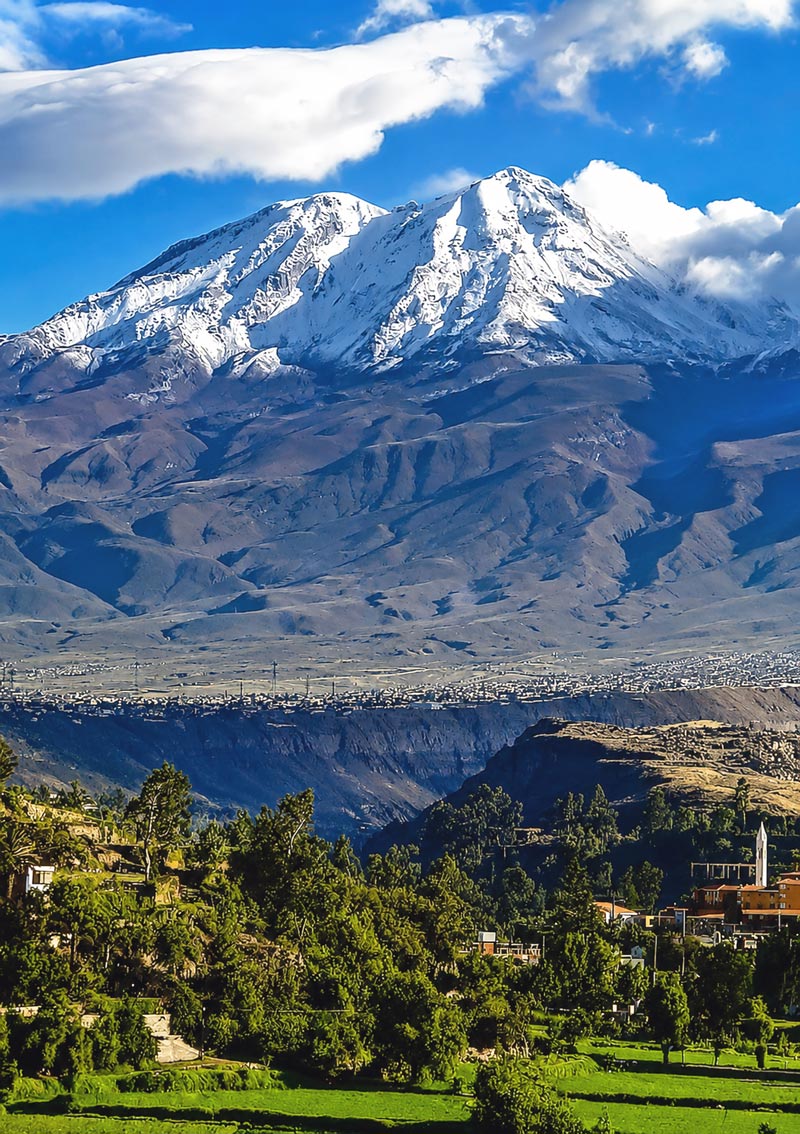
Although less well-known than El Misti, the Chachani volcano is another great adventure you can experience near Arequipa.
At 19,931 feet, it is one of the most accessible peaks above 19,685 feet in Peru.
The climb remains physically demanding due to the altitude, but it is generally considered technically easier than other Andean peaks.
From the summit, the views of the volcanoes surrounding Arequipa and the desert landscapes are breathtaking.
As with El Misti, it’s best to be well acclimated before attempting the climb.
23. Take a culinary tour
For a more complete immersion in Arequipa’s cuisine, I highly recommend signing up for a guided tour with Exquisito Perú.
They are passionate about Peruvian cuisine and have already created several excellent food tours in Lima (check out my experience here!) and now also offer a tour in Arequipa.
They always find interesting spots, the guides are very friendly, the portions are generous, and you usually end up feeling quite full.
It’s an excellent way to discover various local specialties while learning more about Arequipa’s culinary culture.
24. The Sabandía Mill
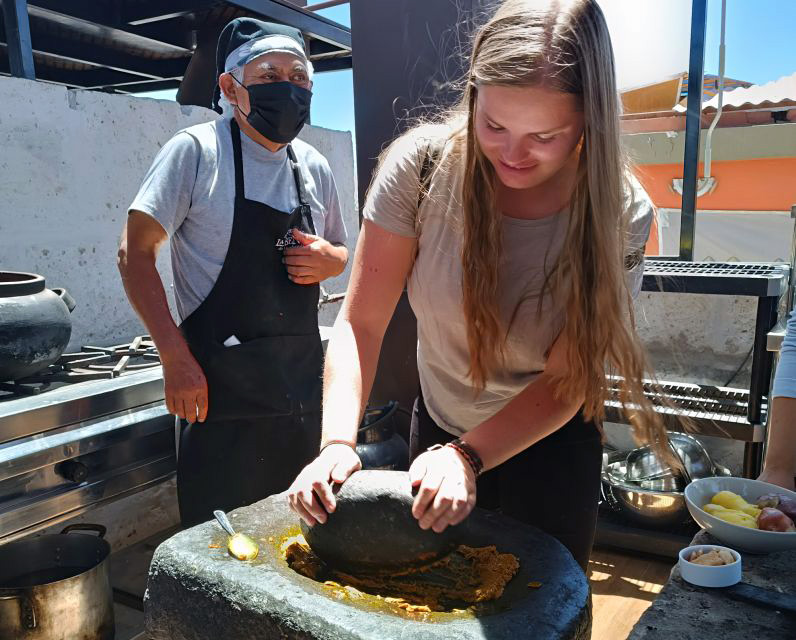
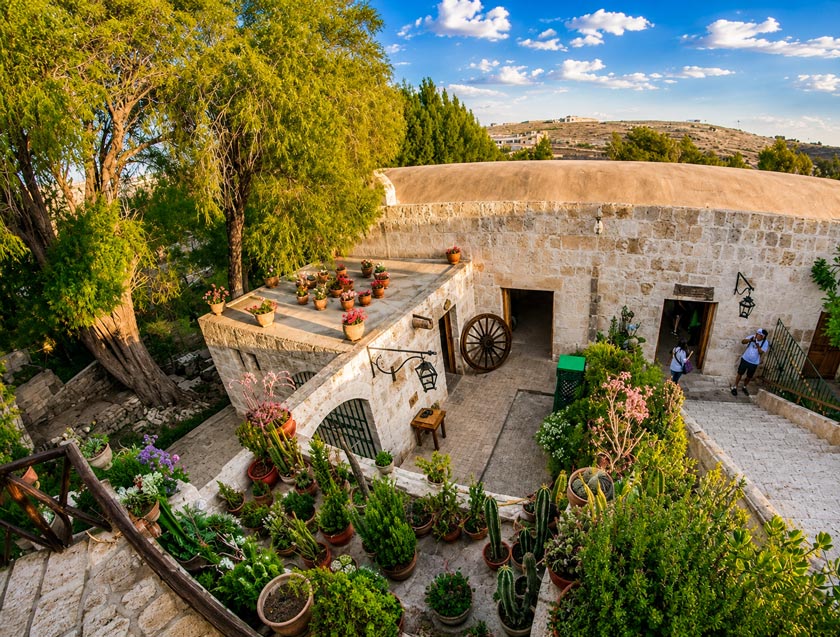
Located about 30 minutes from downtown Arequipa, the Sabandía Mill is an old stone mill built in the17th century in a much greener setting than the city center.
The place is best known for its beautiful surroundings, with the mountains in the background, the irrigation canals, the white ashlar walls, and the fields that surround it.
The mill is still in operation today and offers a glimpse into how locals once used water power to grind grain.
It’s a pleasant outing if you want to get away from the historic center and discover a more rural side of Arequipa.
There are also several small traditional restaurants in the area, and you may occasionally spot horses or llamas in the park surrounding the mill.
- Admission: about 10 soles
- Address: Calle Molinos, Sabandía, Arequipa
How many days do you need to visit Arequipa?
I recommend spending at least 2 days in Arequipa.
Although some travelers only stay one night before heading to the Colca Canyon or Cusco, it would be a shame not to take the time to explore the city.
Between the historic center, the museums, the markets, and the cuisine, Arequipa is well worth slowing down a bit.
Visiting Arequipa in 1 Day
If you only have one day in Arequipa, I recommend focusing on the historic center and carefully selecting your stops so you don’t rush too much.
Ideally, include the major must-sees such as the Monastery of Santa Catalina, the Plaza de Armas, the Cathedral, the Church of La Compañía, and, if you have time, the Santuarios Andinos Museum to see the famous mummy Juanita.
- To plan your day well, you can check out my complete guide to visiting Arequipa in 1 day
Visiting Arequipa in 2 or 3 Days
In my opinion, 2 days is the ideal amount of time to explore Arequipa at a more leisurely pace, without limiting yourself solely to the main attractions in the city center.
With 2 days, you can spend the first day in the historic center, visiting the Plaza de Armas, the Cathedral, the Church of La Compañía, the San Camilo Market, and the Santuarios Andinos Museum.
The second day allows you to visit the Monastery of Santa Catalina at a more leisurely pace, stroll through the Yanahuara neighborhood, eat at a traditional picantería, stop by Mundo Alpaca, and explore the San Lázaro neighborhood.
If you have 3 days, you can add an excursion from Arequipa, such as the Ruta del Sillar, a culinary tour, or even Laguna de Salinas if you want to see different Andean landscapes.
- To see the full day-by-day itinerary, check out my guide to visiting Arequipa in 2 or 3 days
3 to 4 days in the Arequipa region
If you have more time, I recommend using Arequipa as a base to explore the surrounding area.
The most classic option is to visit the Colca Canyon, one of the must-see excursions in southern Peru. You can do it in a day if you’re short on time, but ideally, plan for at least 2 days and 1 night to better enjoy the landscapes, the villages, and the flight of the condors.
If you enjoy hiking, you can also go on a trek through the Colca Canyon or consider other more challenging activities, such as climbing the Misti or Chachani volcanoes.
With several days available, Arequipa can serve as an excellent base for combining colonial city life, cuisine, volcanoes, and Andean landscapes.
- You can also check out my complete Colca Canyon guide to plan your visit, choose the best itinerary, and discover all the must-see places in the region.
Where to stay in Arequipa?
The best place to stay in Arequipa depends largely on the type of trip you’re looking for.
For a first visit, I definitely recommend staying in the historic center, near the Plaza de Armas.
You’ll be able to easily visit the main attractions on foot, enjoy the restaurants, rooftop bars, and the atmosphere of the city center without having to constantly take taxis.
Here are my hotel recommendations in Arequipa for different budgets:
- Arequipay Hostel: located just a few blocks from the Plaza de Armas, this hostel offers very clean and bright dorm beds, as well as private rooms. Guests also have access to a shared kitchen, garden, and rooftop terrace. A great budget-friendly option in the historic center. Breakfast included, from just $12 USD per night!
- Hotel Los Tambos: an excellent value-for-money hotel just 150 ft from the Plaza de Armas, with comfortable rooms and a beautiful rooftop terrace overlooking the historic center and the surrounding volcanoes. The à la carte breakfast is included with several options available. From around $80 USD per night.
- Casa Andina Select Arequipa Plaza: this elegant 4-star hotel enjoys a prime location right on the Plaza de Armas, next to the cathedral. It features stylish rooms, a rooftop pool, a terrace restaurant, a bar, and a fitness center. Breakfast included, from around $160 USD per night.
- CIRQA – Relais & Châteaux: probably one of the most beautiful hotels in Arequipa. This stunning 5-star luxury hotel is set inside a former 16th-century monastery, just one block from the Plaza de Armas. It offers elegant suites, a fine dining restaurant inspired by local picanterías, a panoramic terrace, a heated pool, and several sophisticated lounge areas. Breakfast and dinner included, from around $650 USD per night.
Where to eat and drink in Arequipa?
Arequipa is probably one of the best cities in Peru for dining.
Between traditional picanterías, cafés housed in old colonial mansions, rooftop bars, and pisco bars, there are plenty of interesting spots to discover.
Where to have a good breakfast or coffee in Arequipa?
For breakfast, you can’t go wrong with Eco Brunch (generous portions and excellent service) or La Despensa, especially if you like good homemade bread.
For a great cup of coffee in Arequipa, I love Kafi Wasi Coffee House or the Kaffeehaus, with its laid-back terrace.
To watch the sunset, I love K’cao Chocolates & Café Rooftop, right next to the Santa Catalina Monastery.
The rooftop offers beautiful views of the volcanoes, and their artisanal hot chocolates, made with organic Peruvian cacao, are to die for.

Where can you try Arequipa’s traditional cuisine?
To discover Arequipa’s traditional cuisine, I highly recommend trying at least one authentic picantería.
Among the best-known spots, La Nueva Palomino in Yanahuara remains a classic beloved by both locals and travelers.
I also really liked La Benita de los Claustros, located in the cloisters of La Compañía.
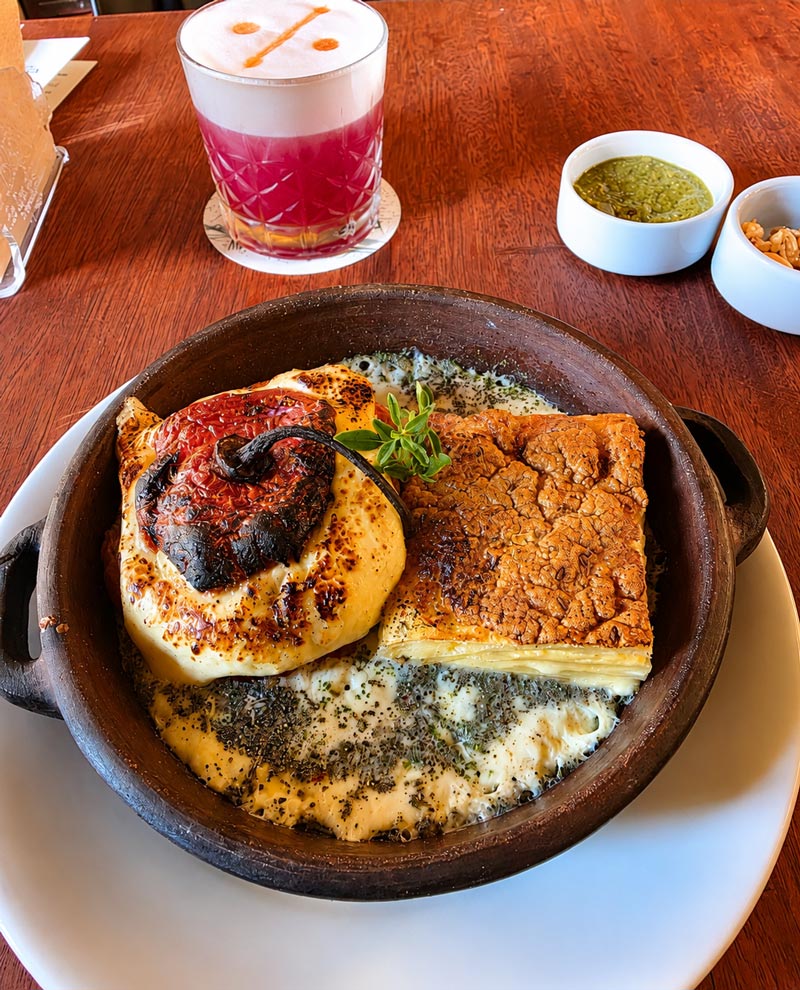
The place is very beautiful and the service is excellent. There I tried a very good Loncco Sour, made with macerated rocoto (chili), chicha de guiñapo, lemon, and egg.
The rocoto stuffed with potato cake was also excellent.
For chocolate lovers, Chaqchao remains a great option with its desserts, organic Peruvian chocolate, and superb selection of Peruvian craft beers.
In the same courtyard, Las Gringas offers fantastic wood-fired pizzas with various Peruvian ingredients and vegetarian or gluten-free options.
Where to grab a drink in Arequipa?
For a good craft beer in Arequipa, head to 7 Vidas Taproom or Chelawasi Public House.
The Nowhere bar, in the San Lázaro neighborhood, is also a great option with its rooftop terrace and laid-back atmosphere.
Finally, for some truly great pisco cocktails, the Museo del Pisco remains a classic in Arequipa.
Despite its name, it’s not a museum, but a bar with an excellent cocktail menu, featuring various traditional Peruvian ingredients like muña, airampo, and prickly pear.
When it cools down at night, I love having their piteado tea, made with tea, lemon, honey, and pisco. It warms you up instantly!

How to get to Arequipa?
Arequipa is one of the most visited cities in Peru and is relatively easy to reach from various regions of the country.
Most travelers arrive by plane or long-distance bus.
Traveling to Arequipa by Plane
Alfredo Rodríguez Ballón Airport is located about 20 to 30 minutes from Arequipa’s historic center, depending on traffic.
There are several daily flights from Lima, Cusco, or Juliaca (Lake Titicaca) with airlines such as Latam, Sky Airline, and JetSMART.
From Lima, the flight takes approximately 1 hour and 30 minutes.
To find the best fares on flights to Peru, I recommend using our flight comparison tool in partnership with Skyscanner. It’s a very convenient way to compare prices and easily find the best deal for both your international flight and your flight to Arequipa.
To get to downtown from the airport, the easiest way is to take a taxi or use an app like Uber or InDrive.
You can also book your private transfer to your hotel:
Travel to Arequipa by bus
The bus remains a very popular option in Peru, especially for travelers who want to save money or enjoy the scenery.
Arequipa is well connected to several major cities in the country:
- Lima → Arequipa: 15 to 17 hours
- Cusco → Arequipa: about 10 hours
- Puno → Arequipa: about 6 hours
For long trips, I strongly recommend choosing a comfortable company with reclining seats, especially for overnight trips.
The best-known companies are usually Cruz del Sur, Civa, and Oltursa.
A very popular route is: Lima – Paracas – Ica and the Huacachina Oasis – Nazca – Arequipa.
This way, you can explore deserts, oases, marine wildlife, and the famous Nazca Lines before arriving in Arequipa.
Frequently Asked Questions – Visiting Arequipa
Is Arequipa worth visiting?
Yes, definitely. For me, Arequipa is one of the most beautiful cities in Peru.
Between its white sillar architecture, the surrounding volcanoes, the cuisine, and the numerous excursions available, the city deserves much more than just a quick stopover before heading to Colca.
When is the best time to visit Arequipa?
The best time is usually from May to November, during the dry season.
The sky is usually very clear, allowing you to enjoy the views of the volcanoes and the excursions around the city.
January and February are rainier, especially in the regions near Colca.
Should you be concerned about altitude in Arequipa?
Arequipa is located at an altitude of about 7,661 feet.
Most travelers notice the effects of altitude much less than in Cusco or at Lake Titicaca, but it’s still recommended to take it easy on the first day.
Excursions such as Colca, Salinas, or the volcanoes go much higher.
Is Arequipa safe?
Yes, Arequipa is generally considered one of the most pleasant and safest cities in Peru for travelers.
As in any place, you should keep an eye on your belongings in very touristy areas or at markets.
Is it a good idea to combine Arequipa and the Colca Canyon?
Yes, absolutely. Most travelers visit Arequipa and the Colca Canyon together.
I usually recommend setting aside at least 3 or 4 days to enjoy both without having to rush around all the time.
Visiting Arequipa: My Opinion
Many travelers rush through Arequipa before heading on to Cusco or the Colca Canyon.
However, with its unique architecture, cuisine, museums, volcanoes, and the many excursions available around the city, it’s undoubtedly one of Peru’s most interesting destinations.
Plus, it’s a much more pleasant and peaceful city than other major tourist destinations in the country.
If you have time, I really recommend staying a few days instead of just making a quick stop!
Rent a Car in Peru
Renting a car is one of the best ways to explore Peru at your own pace and make the most of your trip!
Personally, I always use Booking.com Cars for a few key reasons:
- Easily compare prices from all major rental agencies in one place—finding the best deal has never been easier!
- Free cancellation on most bookings, so you can reserve with peace of mind.
- Better insurance coverage at a lower price than rental companies—saving you money with no extra effort.
Click the button below to find the best car rental deals in Peru:
Rent a car
Book entrance tickets and guided visits
Take a travel insurance
Book a tour
✈️ Book your flight
Traveling to Peru? These articles will help you!
Discover all my articles about Peru: All my tips and itineraries to plan your trip in one place!
40 EPIC Things to Do in Peru (+ My Best Tips)
- One day itinerary in Arequipa: Best places to visit + Tips
- 2 or 3 Days in Arequipa: The Perfect Itinerary (+ My Tips)
- Colca Canyon: The Definitive Guide (+ My Tips)
- Itinerary: 5-6 days in Peru – Lima, Arequipa, Colca Canyon, Cusco, Sacred Valley and Machu Picchu
- Itinerary: 7-8 days in Peru – See the maximum in one week
- Itinerary: 10 days in Peru – The ideal itinerary for a short stay in Peru
- Itinerary: 2 weeks in Peru – The classic route
- Itinerary: 15 days in Peru – An itinerary that includes northern Peru
- Itinerary: 3 weeks in Peru
- Itinerary: 3 weeks in Peru + Bolivia – The best itinerary for visiting both countries
- Itinerary: 1 month in Peru – What to see and do in 30-31 days
You’re using Pinterest? Here is the picture to pin!