Colca Canyon Peru: Complete Travel Guide for 2026
Are you planning to visit the Colca Canyon during your trip to Peru? Great idea!
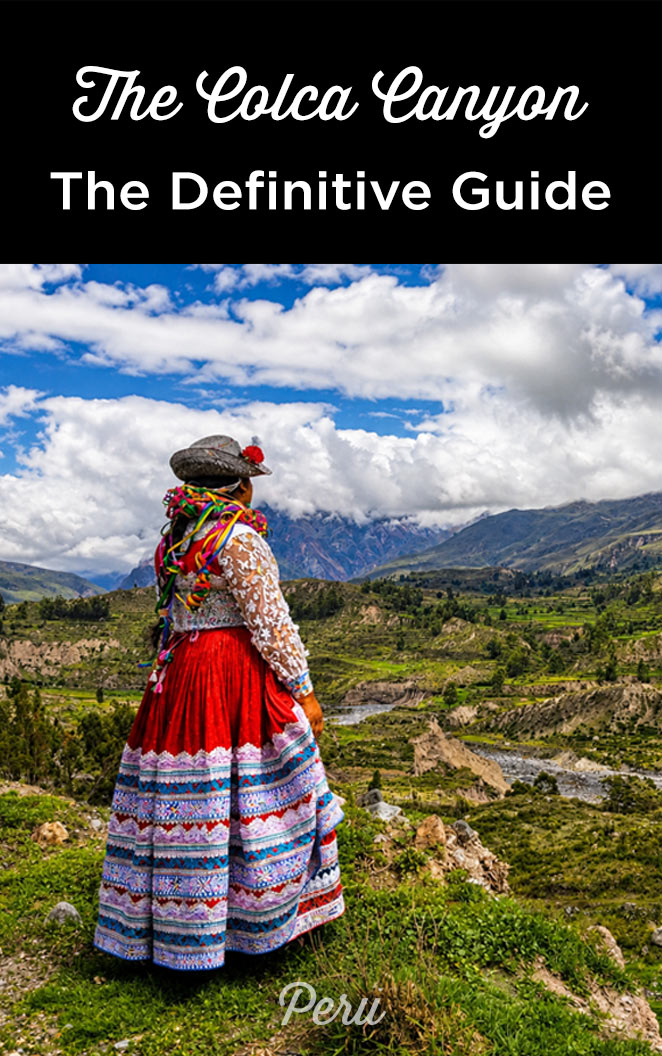
Located about 4 hours from Arequipa, the Colca Canyon is one of Peru’s most beautiful landscapes, featuring volcanoes, Andean villages, terraced fields, and its famous condors.
Twice as deep as the Grand Canyon in the United States, the Colca was long considered the deepest canyon in the world before being surpassed by the Cotahuasi Canyon, also located in the Arequipa region.
Whether you simply want to see the Cross of the Condor, go on a trek through the canyon, stay in a hotel with spectacular views, or head directly to Puno and Lake Titicaca, there are several ways to plan your visit.
To help you plan your itinerary, here is my complete guide to the Colca Canyon, featuring must-see attractions, the most beautiful viewpoints, the best hotels, treks, transportation, prices, and all my practical tips.
Sommaire
- Colca Canyon Peru: Complete Travel Guide for 2026
- What to do and see in the Colca Canyon?
- Where to stay in the Colca Canyon?
- How many days does it take to visit the Colca Canyon?
- How much is admission to the Colca Canyon?
- How to get to Colca Canyon from Arequipa?
- How to get around in the Colca Canyon?
- When is the best time to visit the Colca Canyon?
- What should you bring to visit the Colca Canyon?
- Visiting
- : My Final Tips
- Book Your Flight at the Best Price
- Rent a Car in Peru
- Traveling to Peru? These articles will help you!
What to do and see in the Colca Canyon?
The Colca Canyon is about more than just the Cross of the Condor. Between the Andean landscapes, traditional villages, hikes, hot springs, and volcanoes, there’s easily enough to keep you busy for several days in the region.
Here are the main must-see attractions in the Colca Canyon.
1. Admire the landscapes of the Colca Canyon
The Colca Canyon is best known for its spectacular scenery.
Along the route from Arequipa, you’ll pass
through
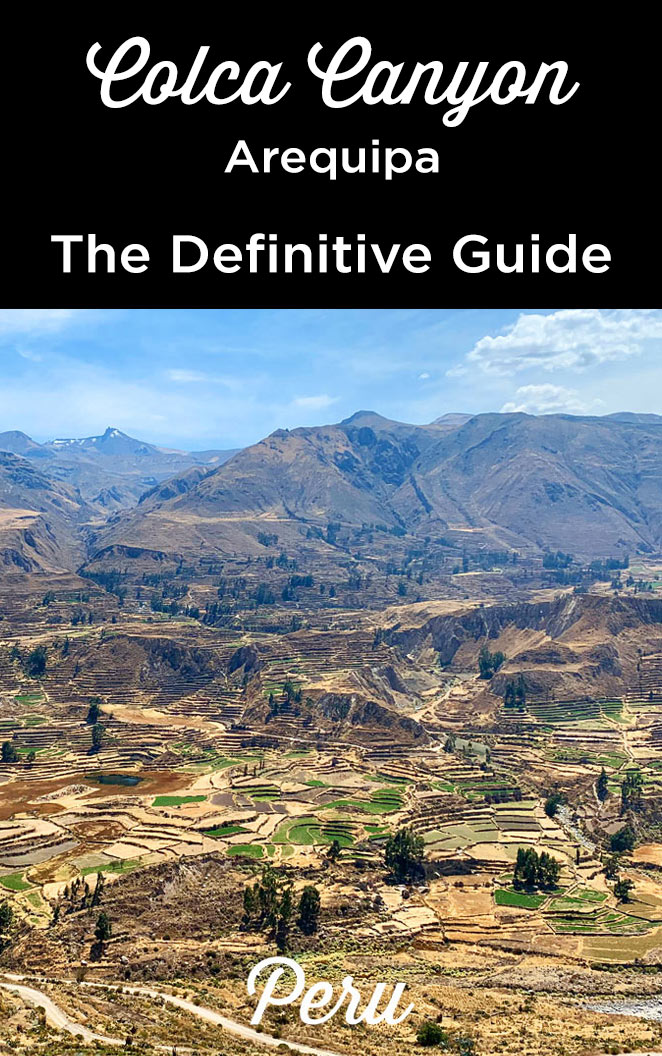
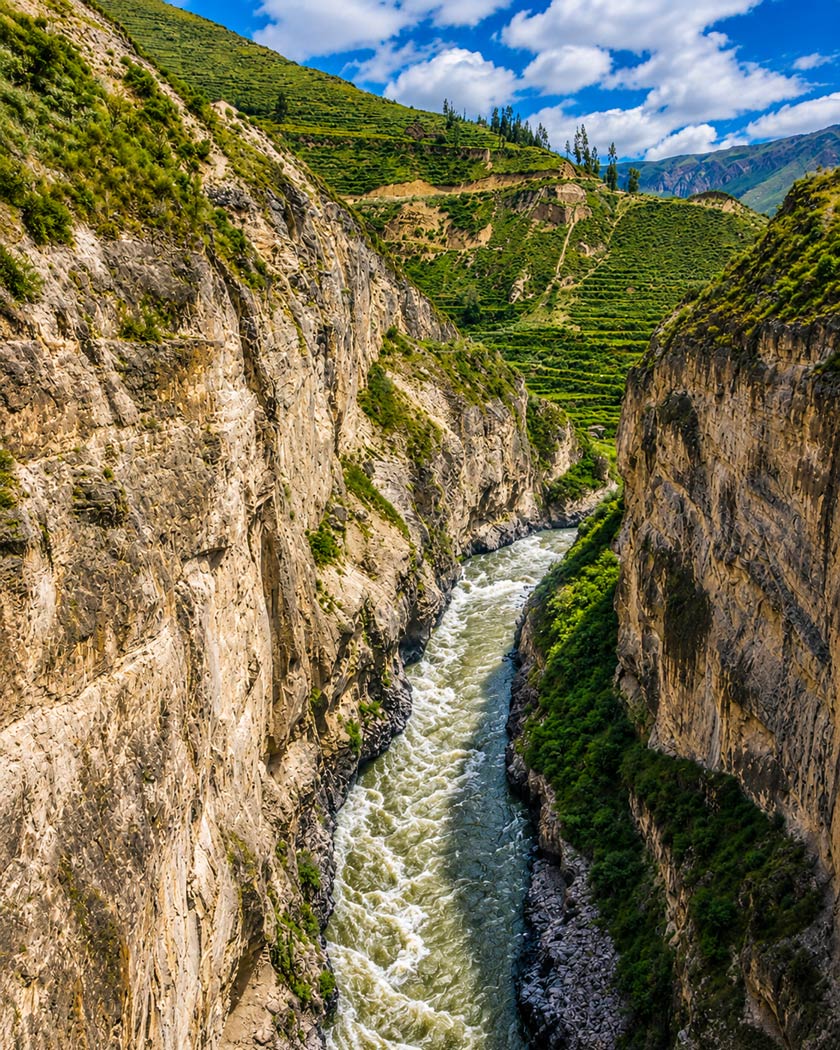
high-altitude plains, volcanic areas, Andean villages, and vast terraced fields used since pre-Inca and Inca times.
The Colca River winds through the bottom of the canyon while several volcanoes dominate the landscape, including:
- Ampato (6,310 m)
- Sabancaya (5,076 m)
- Hualca Hualca (6,025 m)
- Huarancante (5,426 m)
- Chucura (5,200 m)
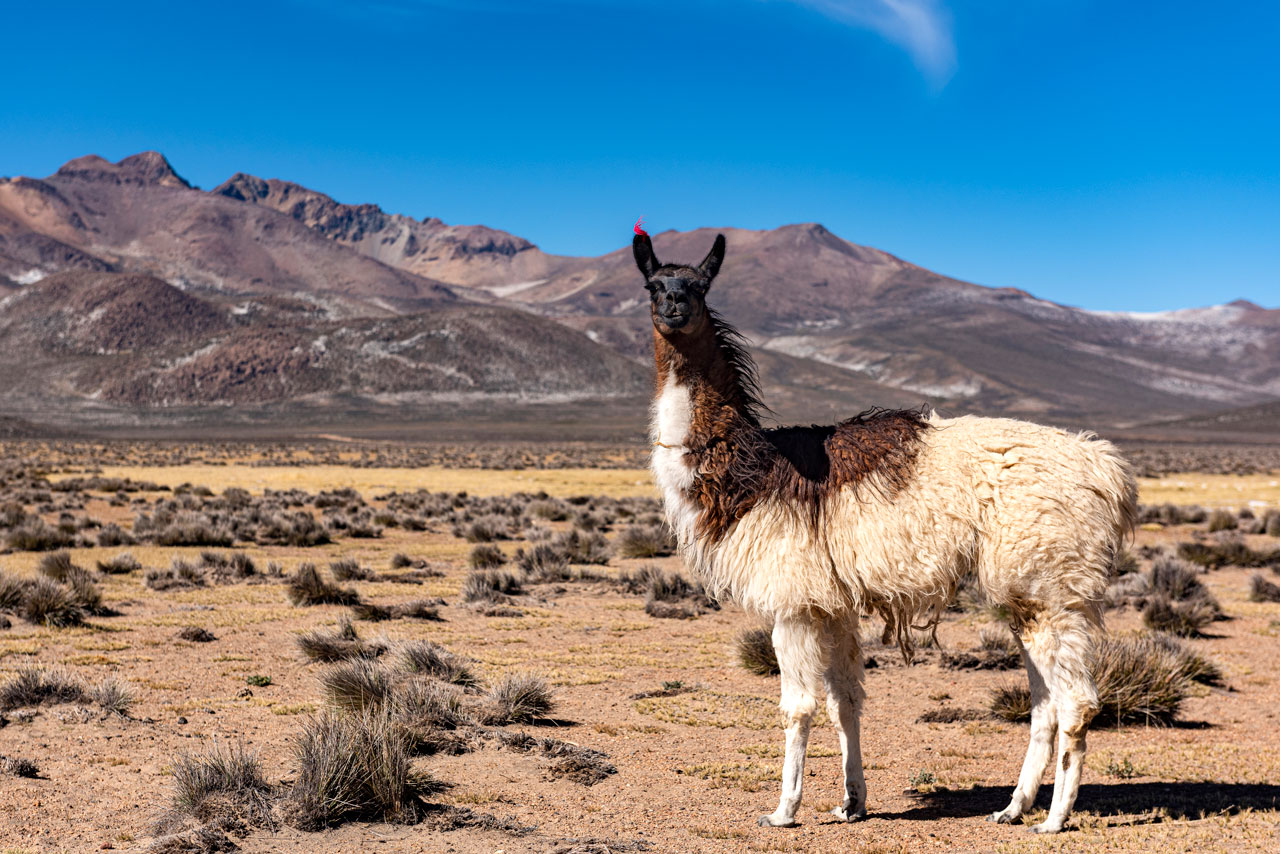
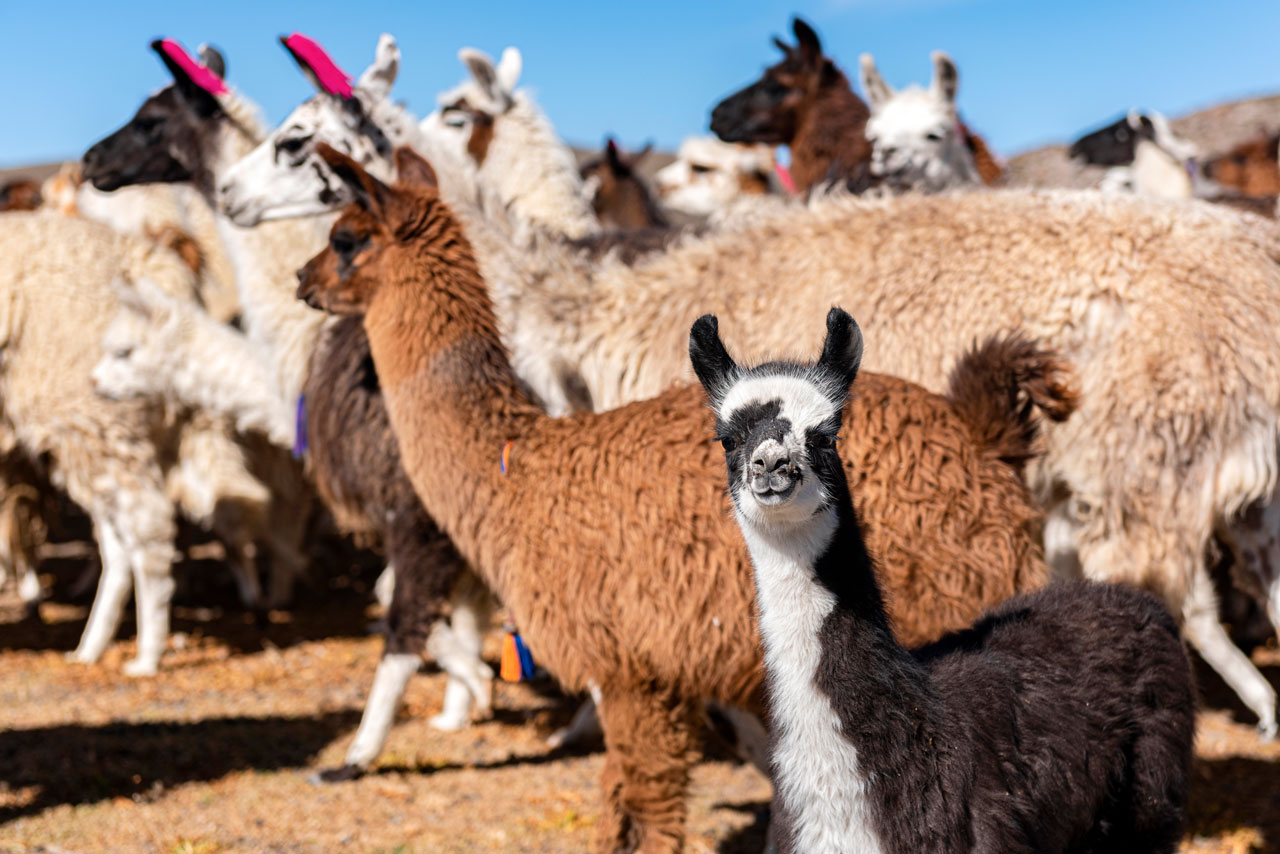
The route also passes through the Salinas y Aguada Blanca National Reserve, known for its high-altitude landscapes and Andean wildlife.
You’ll easily spot:
- vicuñas (the world’s finest fiber)
- llamas
- alpacas
- Andean flamingos
The highest point on the route reaches an altitude of approximately 4,900 meters. Tour agencies usually make a quick stop to enjoy the view and take some photos.
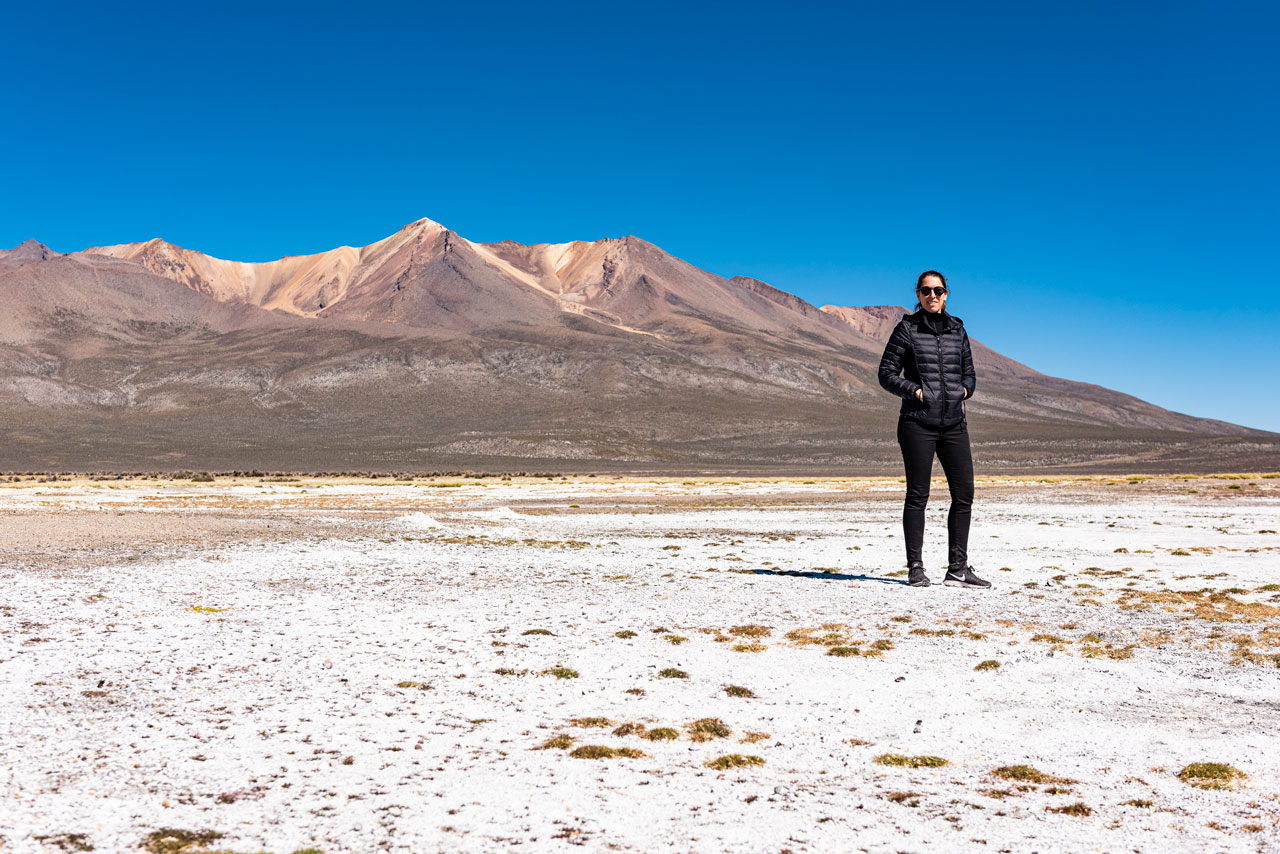
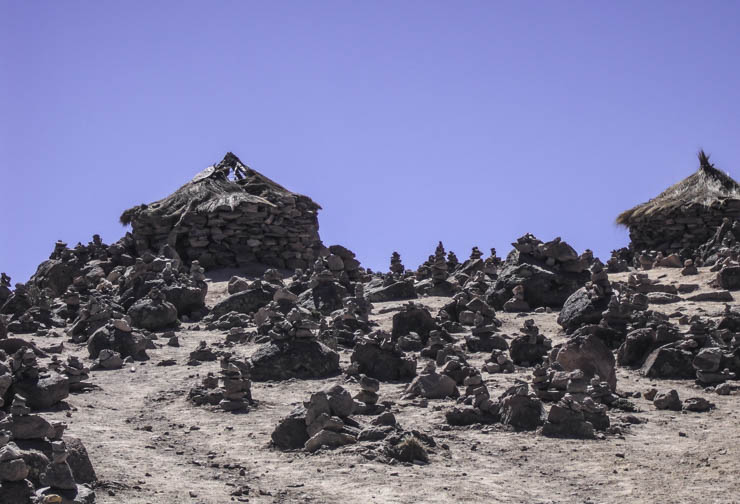
During my first visit to Colca, I had the bad idea of running up a small hill at nearly 5,000 meters… and I ended up feeling sick for several hours with nausea, headaches, and dizziness.
At this altitude, even a little physical exertion can catch you off guard.
And the worst part? The mysterious “little houses” I was so eager to see were simply… restrooms
- See also: How to avoid altitude sickness in Peru?
2. See the condors at Cruz del Condor
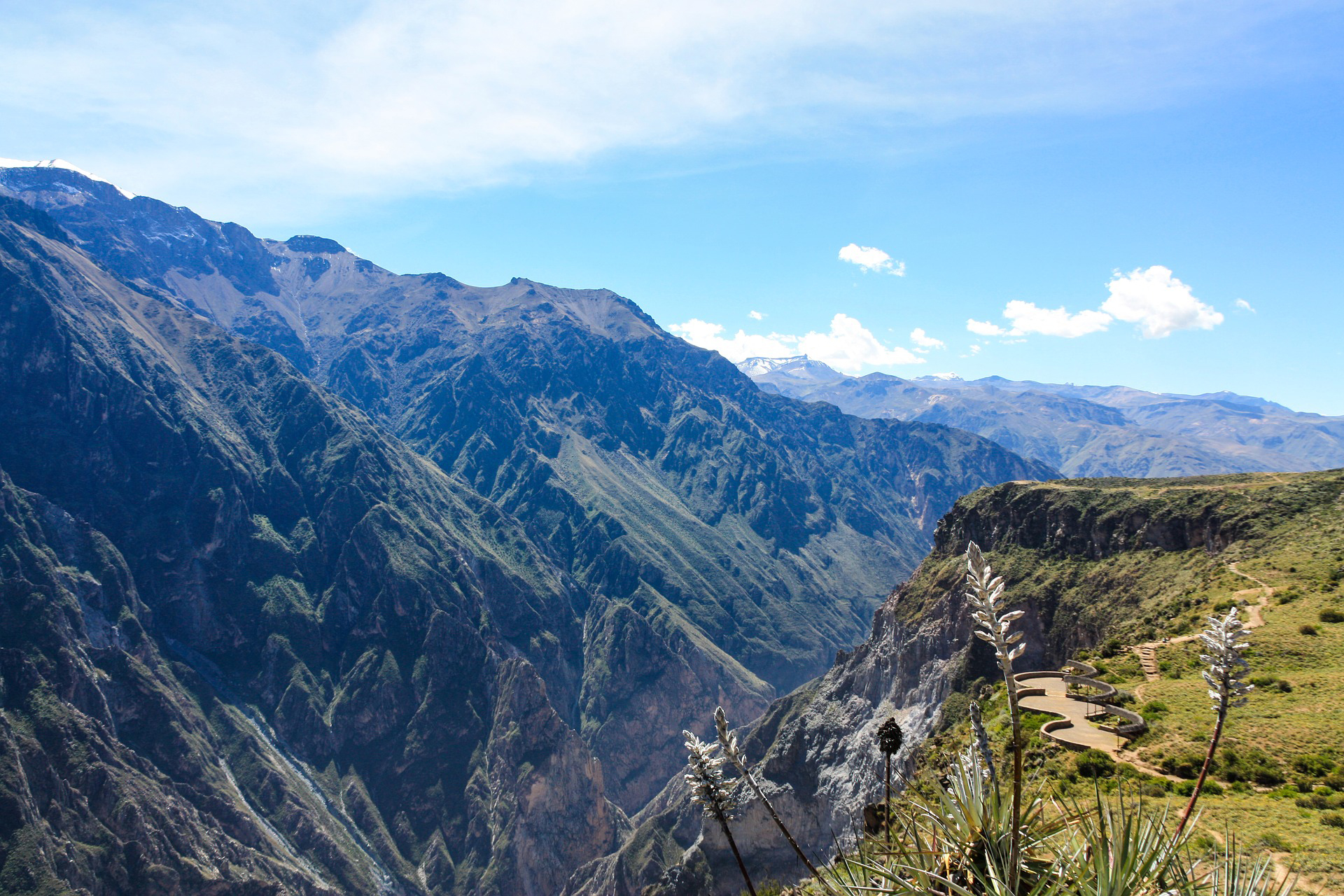
The Cruz del Condor is the most famous viewpoint in the Colca Canyon.
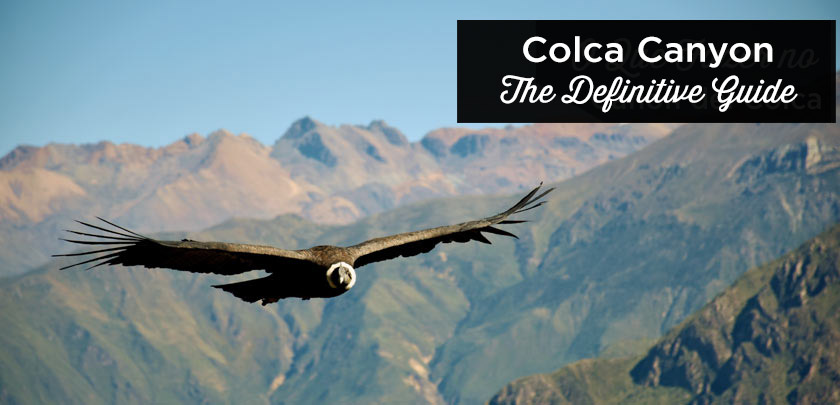
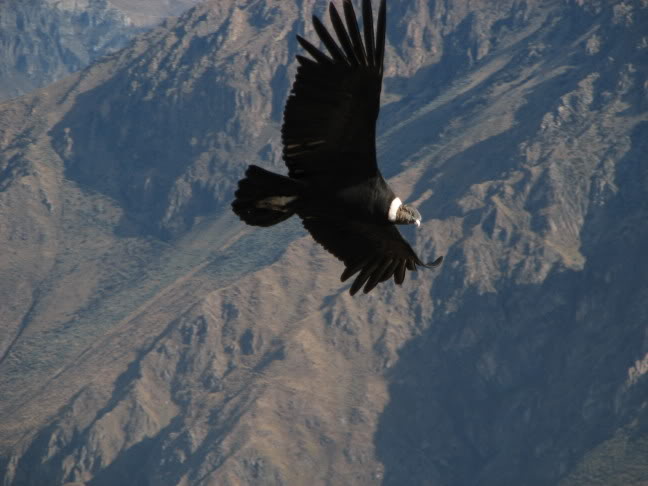
This is where most travelers come to observe the famous Andean condor, one of the largest birds in the world with a wingspan of up to 3.5 meters.
The view is spectacular:
- the Colca River flows about 1,200 meters below
- the canyon’s cliffs are impressive
- the Mismi volcano can be seen in the distance
Seeing the condors glide above the canyon, it’s easy to understand why this animal was considered sacred in Andean and Inca culture.
That’s when warm air currents begin to rise in the canyon, helping the condors glide.
How do you get to the Cross of the Condor?
- From Yanque: local bus to Cabanaconde (about 4 soles)
- From Chivay: local bus to Cabanaconde (about 5 soles)
If you ’re already staying in the Colca Valley, there’s also a tour from Chivay to the Cross of the Condor that returns to Arequipa—a convenient option if you’d rather not arrange transportation on your own.
3. Discover the villages of the Colca Canyon
The Colca Canyon is home to several Andean villages, each very different from the others.
Some are particularly useful for organizing your stay or trek, while others offer a much quieter and more authentic atmosphere.
Here are the main villages to know about before visiting Colca.
Chivay
Chivay is the main gateway to the Colca Canyon.
This is where most tours from Arequipa stop, and you’ll find:
- hotels
- restaurants
- travel agencies
- transportation
- small markets
Even though it isn’t the most charming village in Colca, it’s still very convenient for a first visit or a short stay.
Just a few kilometers away are the famous hot springs of La Calera, perfect for relaxing after a drive or a hike.
- Admission to the hot springs: about 17 soles
- From Chivay: colectivo (2 soles) or taxi
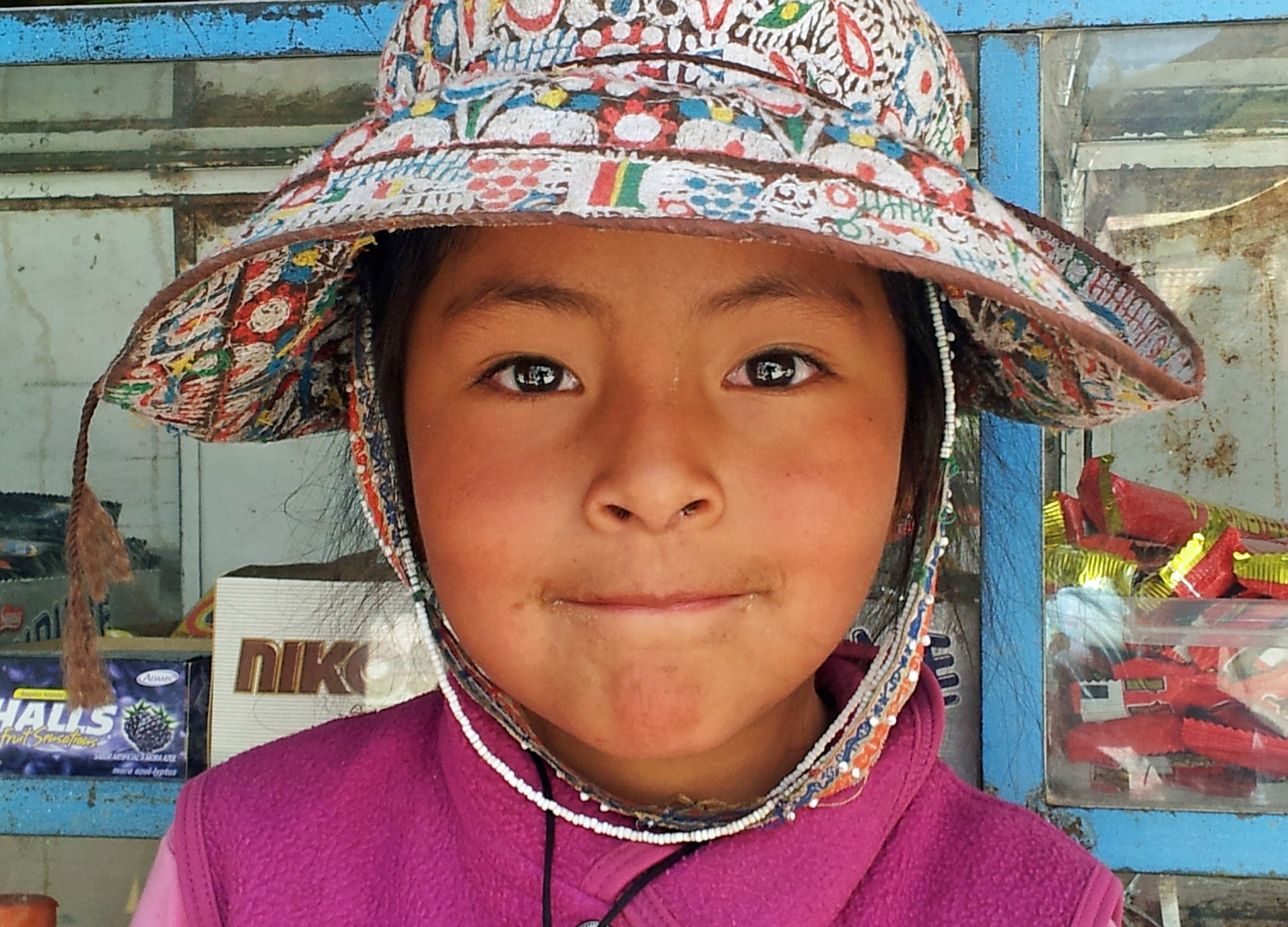
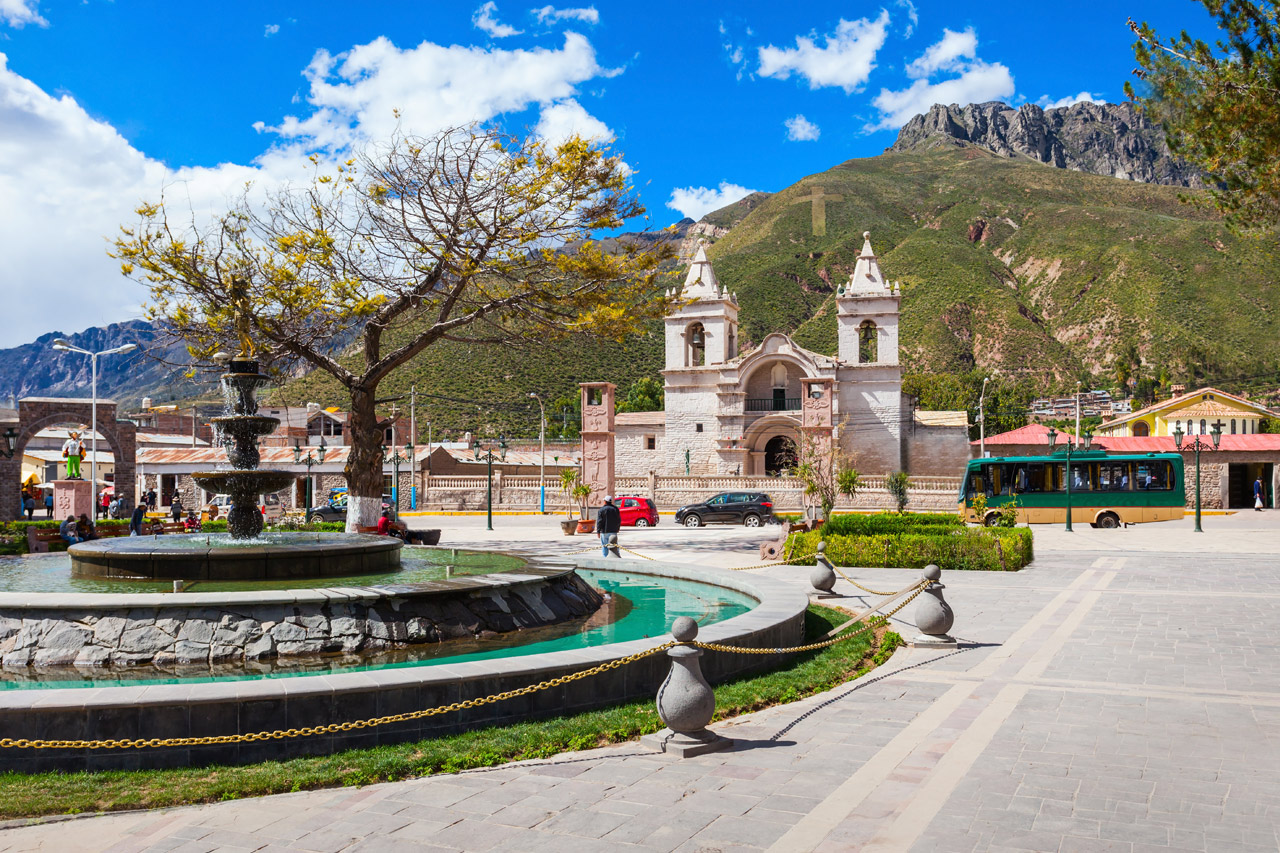
Yanque
In my opinion, Yanque is one of the most pleasant villages to stay in the Colca Valley.
The atmosphere is calmer than in Chivay, and the main square is probably the prettiest in the entire valley.
The village also has a beautiful colonial church and retains a much more peaceful atmosphere.
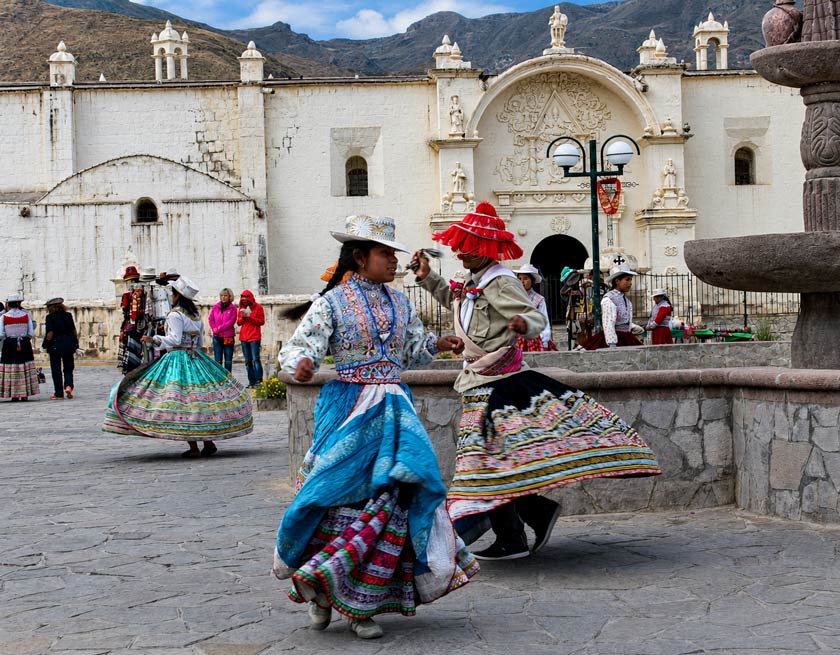
Every morning around 7 a.m., children in traditional clothing dance in the main square to the sound of Andean music. It’s very touristy, but it’s still a nice sight to see if you’re spending the night there.
Cabanaconde
Cabanaconde is a must-visit village for hikers!
This is where most of the treks in the Colca Canyon begin, particularly those heading to:
- Sangalle (the oasis)
- San Juan de Chuccho
- Malata
- Cosñirhua
The village is much smaller and simpler than Chivay, but the surrounding landscapes are magnificent.
About a 20-minute walk away, you can also reach several viewpoints with superb views of the canyon, such as:
- Cejana
- Achachihua
This is also where several buses and colectivos pass through on their way to Arequipa or Chivay.
You can also book an organized trek in the Colca Canyon here!
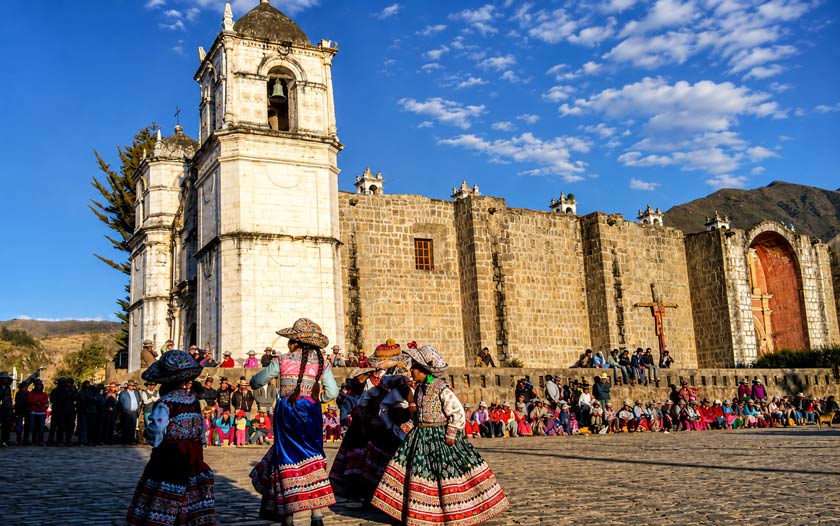
Coporaque
Coporaque is a great option for discovering a more local and community-oriented side of Colca.
The village is much less touristy than Chivay, and several local initiatives are being developed there.
In particular, you can discover:
- the Casa Cultural
- local crafts
- homestay experiences
- cooking classes
- the thermal waters of Sallihua
From Chivay:
- shared taxi: about 2 soles
- taxi: about 20 soles
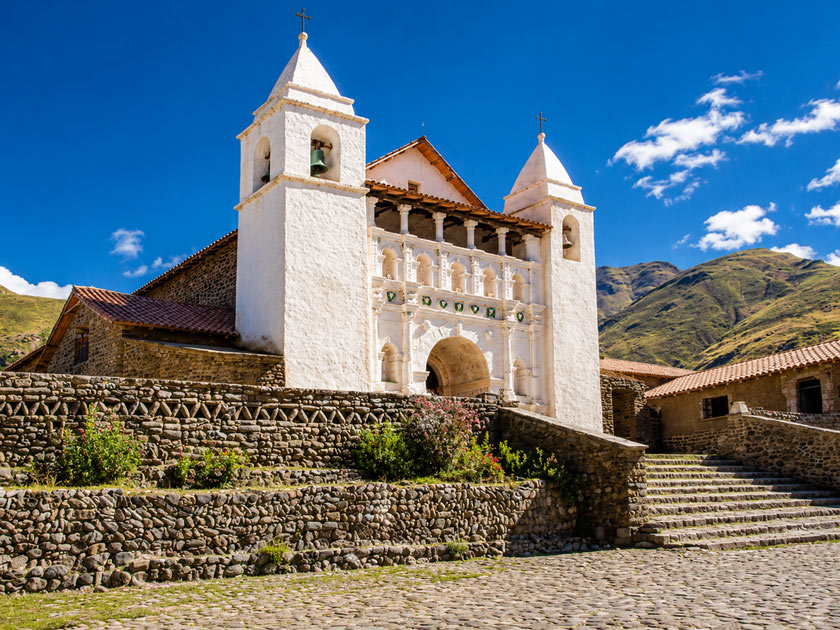
If you have more time, it’s definitely worth venturing a bit off the classic Chivay–Cross of the Condor route.
4. Hiking in the Colca Canyon
Hiking in the Colca Canyon is one of the best experiences to have in the Arequipa region.
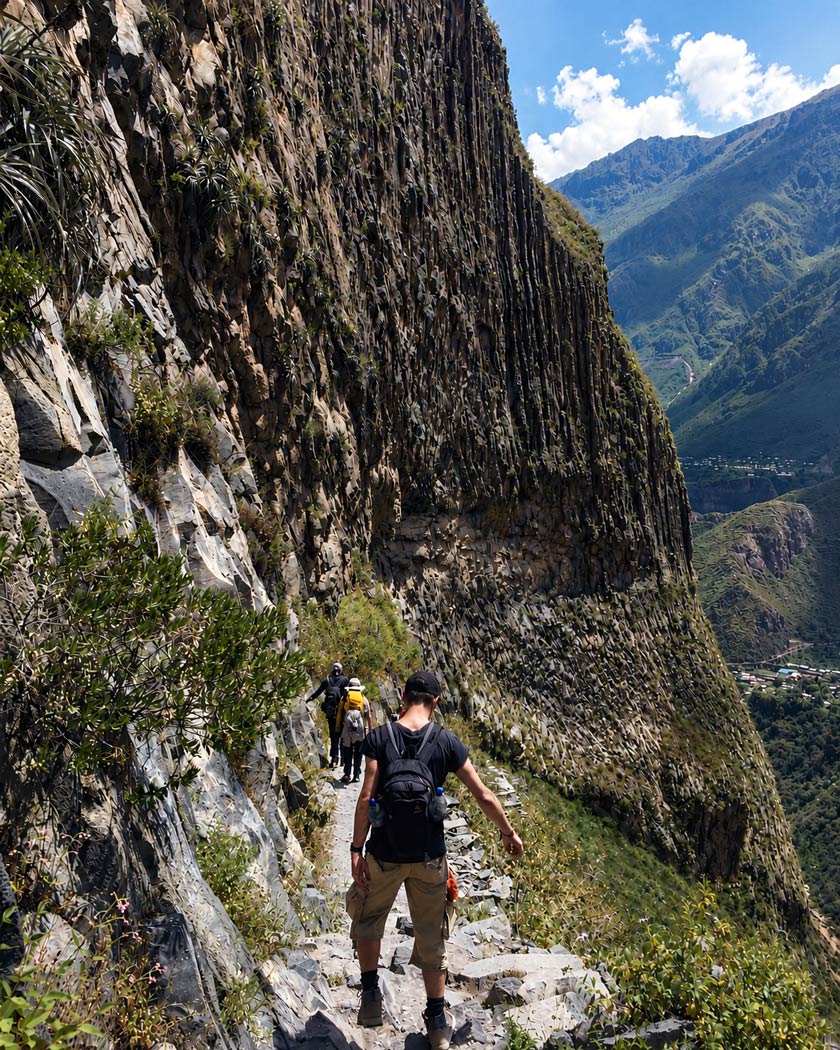
Contrary to what many people imagine, the trails aren’t technically difficult, but you still need to be in good physical condition due to the heat and altitude.
Most hikes start from Cabanaconde.
Can you do the trek without a guide?
Yes, it is entirely possible to hike the Colca Canyon without a guide.
The main trails are relatively well-marked, and many travelers do it independently.
However, you must:
- bring enough water
- set out early in the morning
- manage the altitude and heat effectively
- avoid underestimating the uphill climbs
The Colca Trek in 1 Day
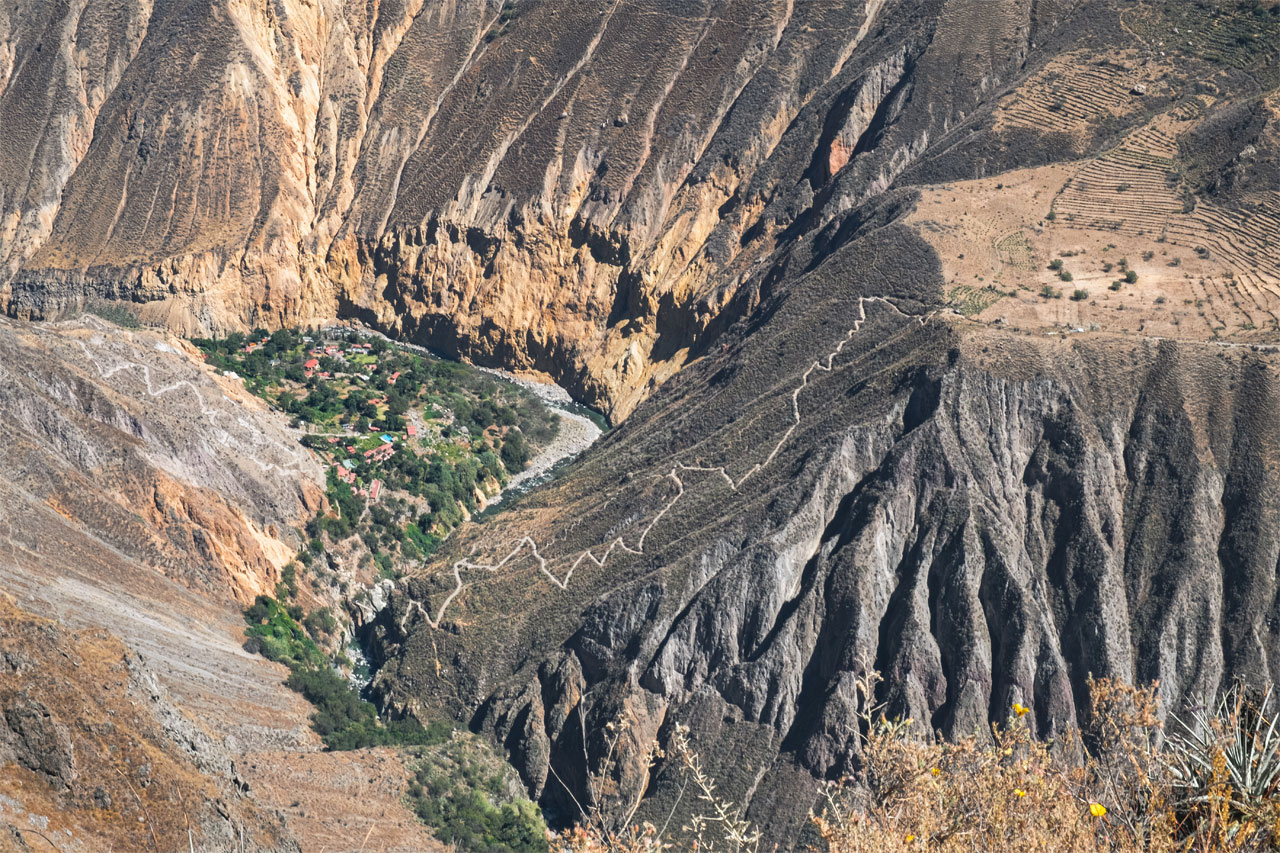
If you are in good physical shape, it is possible to descend to Sangalle, also known as the Oasis, and then climb back up on the same day.
- Approximate time: 3 hours down + 5 hours up
Honestly, it’s pretty intense.
The climb back up in the heat can be tough, especially with the altitude.
The Colca Trek in 2 Days
In my opinion, the 2-day format offers the best balance!
It allows you to enjoy the scenery more and avoid having to make the round trip in a single day.
Here is the classic itinerary:
- Day 1: Descent to San Juan de Chuccho and overnight stay in the canyon
- Day 2: Pass through Cosñirhua, Malata, and Sangalle before the climb back up
Some people also prefer to sleep right near the oasis to better enjoy the setting.
- Also check out: Hugues’ full experience on the 2-day Colca Canyon trek!
You can book the 2-day trek in the Colca Canyon here (by selecting the 2-day option):
The 3-day Colca trek
The 3-day trek allows you to walk at a more leisurely pace and discover more small villages and landscapes of the canyon.
This is the best option if you really love hiking and want to enjoy the Colca even more.
You can book the 3-day Colca Canyon trek here (by selecting the 3-day option):
The trip takes about 5 to 6 hours.
And most importantly: bring plenty of water. With the heat and altitude, you can get dehydrated very quickly in the canyon.
5. Other things to do in the Colca Canyon
Beyond the classic must-sees, the Colca Canyon also hides several lesser-known sites and activities.
If you have more time in the region, it’s definitely worth venturing a bit off the usual tourist trail.
Mucurca Lagoon
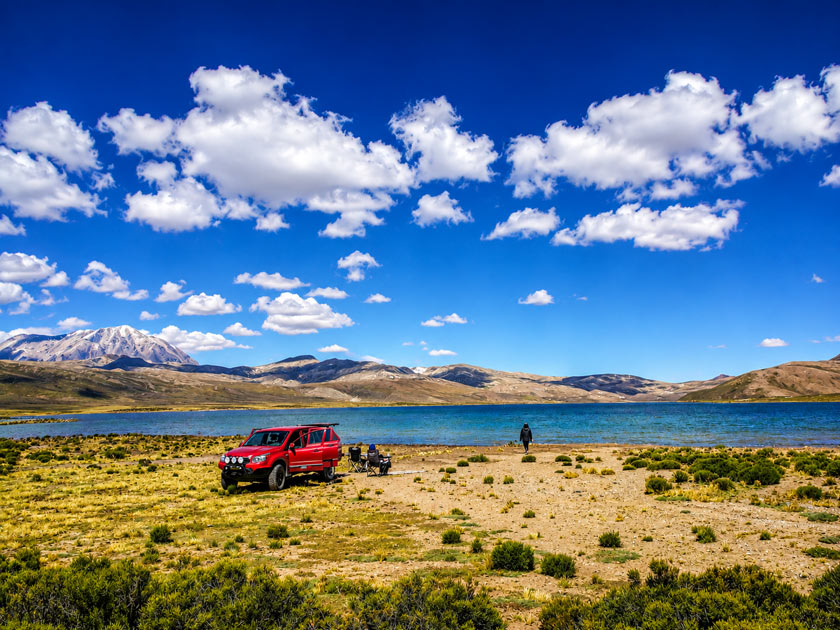
Located at an altitude of about 4,350 meters, Mucurca Lagoon offers magnificent panoramic views of the volcanoes:
- Hualca-Hualca
- Sabancaya
- Ampato
It’s also a great spot for birdwatching, particularly for Andean flamingos.
Access is typically by 4×4.
The Ruins of Kallimarca
Kallimarca is an ancient pre-Inca religious site located near Cabanaconde.
After about a 1 hour 20 minute walk, you can enjoy a beautiful view of:
- the agricultural terraces
- the village of Cabanaconde
- the Hualca-Hualca volcano
The Ruins of Uyo Uyo
Uyo Uyo is an ancient abandoned village that once overlooked the Colca Valley.
You can still see there:
- remnants of the Collagua and Inca cultures
- ancient irrigation systems
- beautiful views of the valley
The site remains relatively unvisited.
The Chimpa Fortress
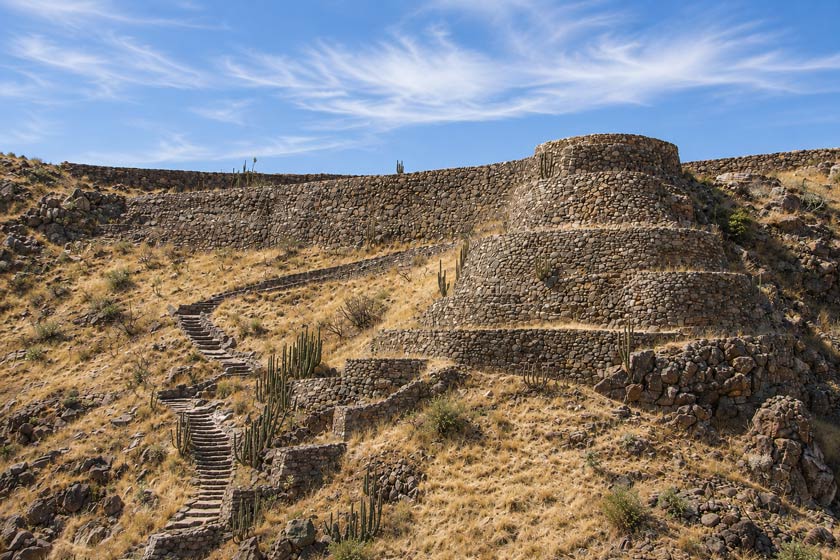
This ancient pre-Inca fortress, built by the Collagua people, is hidden deep in the mountains.
The hike to reach it takes about 2 to 3 hours.
It’s a great option for those looking for an activity that’s a bit off the beaten path.
The Church of Lari
Nicknamed the “Cathedral of Colca, ” the Church of Lari is one of the most beautiful religious buildings in the valley.
It dates back to the 18th century and features beautiful Baroque architecture.
Adventure Activities in Colca
It is also possible to enjoy several outdoor activities in the Colca Canyon:
- cycling
- rafting
- horseback riding
- hiking
- volcano climbing (e.g., Hualca-Hualca Volcano for experienced hikers)
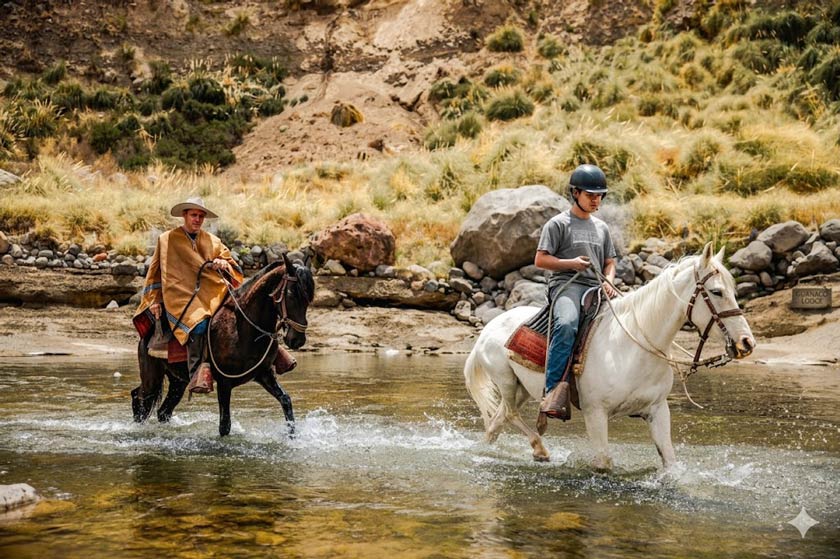
If you’re looking for a unique activity in Colca, you can explore the valley on a horseback ride with a Peruvian Paso horse, an iconic breed known for its particularly comfortable gait.
Where to stay in the Colca Canyon?
The best place to stay in the Colca Canyon depends mainly on the type of trip you want to take.
- Chivay: for a first visit, easy access, short stay
- Yanque: a more peaceful stay, comfortable hotels, hot springs
- Cabanaconde: easy access to hiking and the canyon
Here are my hotel recommendations in Colca based on your budget and travel style.
The best hotels in Yanque
- Miskiwasi Bed & Breakfast: an excellent choice for enjoying the tranquility of the Colca Valley, with comfortable and spacious rooms. The hotel also features a lovely garden and is located near the La Calera hot springs. A very good breakfast is included. Starting at €40 per night.
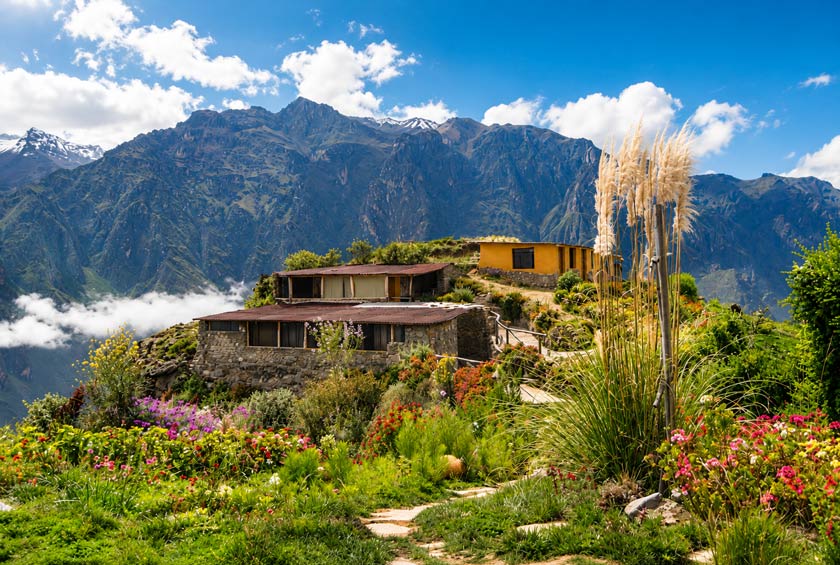
- Colca Lodge Spa & Hot Springs: probably one of the best choices for a comfortable stay in Colca. The hotel offers direct access to the hot springs, a spa, a restaurant, a bar, and beautiful rustic-chic rooms with views of the gardens. Starting at €220 per night.
- Las Casitas: one of the most exclusive hotels in the entire Colca Valley. Private villas with fireplaces, terraces, and heated pools overlooking the canyon, an excellent restaurant, a spa, and numerous on-site activities. The setting is magnificent, with llamas and alpacas roaming around the property. Starting at €640 per night.
The best hotels in Cabanaconde
- Homestay Pachamama: a friendly, welcoming place to stay in Cabanaconde with comfortable rooms and an excellent on-site restaurant. The staff is also very helpful in organizing treks and transportation in the region. Starting at €40 per night.
- La Granja del Colca: We absolutely love this hotel perched on a cliff overlooking the canyon. The view is spectacular, especially in the morning when condors sometimes fly right past the rooms. There are also llamas in the garden. Starting at €50 per night.
The best hotels in Chivay
- Casita Azul: a great, affordable option in Chivay with a comfortable apartment, fully equipped kitchen, and a balcony overlooking the mountains. Very well located near the Plaza de Armas. Starting at €25 per night.
- Casa Andina Classic Colca: a comfortable country-style hotel with bungalows, gardens, a restaurant, a spa, and even a telescope for stargazing in the southern sky . A great choice for a peaceful stay in Colca. Starting at €100 per night.
- LLahuar Lodge : starting at €15
- Paraiso Las Palmeras : starting at €27
How many days does it take to visit the Colca Canyon?
Most travelers visit the Colca Canyon in 1 or 2 days from Arequipa.
But honestly, if your itinerary in Peru allows it, I find that 2 days offer a much more enjoyable experience.
Visiting the Colca Canyon in 1 day
It is possible to take a day trip from Arequipa, but keep in mind that the drive is long:
- about 4 to 5 hours each way
This option is best suited if:
- you have limited time
- you mainly want to see the scenery and the condors
- you don’t want to go on a trek
The tour generally includes:
- pickup from your hotel in Arequipa
- breakfast
- lunch in Chivay
- the Cross of the Condor
- several scenic stops
Visit Colca Canyon in 2 days
For me, 2 days is clearly the best way to explore Colca.
This allows you to:
- to enjoy the scenery more
- to see the condors at a more leisurely pace
- to sleep in the canyon
- to enjoy the hot springs
- to reduce some of the fatigue from the drive
The most popular option is the 2-day Colca Canyon tour with a direct transfer to Puno, ideal if you want to explore the canyon at a leisurely pace while optimizing your Peru itinerary.
If you’re already in Chivay and simply looking for a convenient way to get to Puno, there’s also a Chivay–Puno tour transfer with several scenic stops in the Altiplano.
How much is admission to the Colca Canyon?
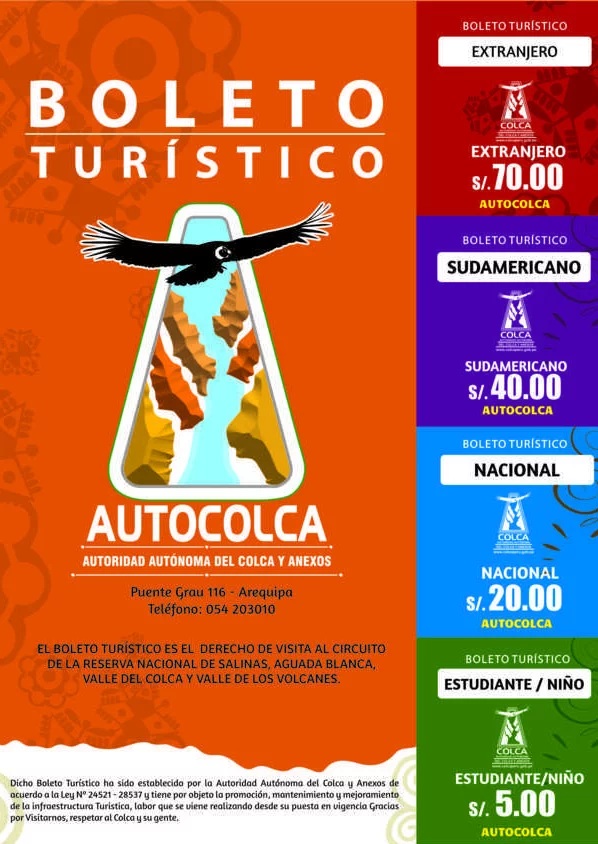
There is an admission fee for tourists visiting the Colca Canyon.
The official tourist ticket grants access to:
- the Colca Canyon
- the Cross of the Condor
- the main viewpoints
- to the trekking areas around Cabanaconde
- several areas of the valley
| Ticket type | Price |
| Foreign adult | 70 soles |
| Child | 20 soles |
The ticket is valid for 1 week.
However, it does not include admission to the La Calera hot springs.
Some people are never checked, while others have to show their ticket several times during the trip.
How to get to Colca Canyon from Arequipa?
There are mainly two ways to reach Colca Canyon from Arequipa:
- with an organized tour
- by local bus or colectivo
Traveling to Colca on an organized tour
This is the easiest option if you don’t want to arrange transportation yourself.
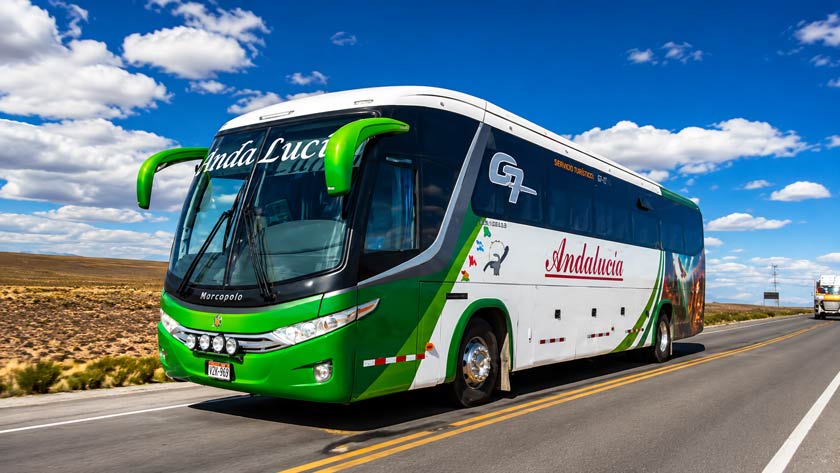
Tour agencies usually pick you up directly from your hotel in Arequipa around 3 a.m.
The standard itinerary includes:
- a breakfast stop in Chivay
- the Cross of the Condor
- several scenic overlooks
- stops in certain villages
Depending on the tour you choose, some also include:
- the hot springs
- an overnight stay
- a trek
- transfer to Puno
Traveling to Colca by local bus
The local bus is the cheapest option for visiting Colca.
To do this, head to the Arequipa bus terminal, located about a 10-minute taxi ride from the Plaza de Armas.
The scenery is generally more beautiful on that side for much of the journey!
| Destination | Duration | Approximate price |
| Chivay | 4 hours | 15 soles |
| Cabanaconde | 4 to 5 hours | 17 soles |
Departures to Cabanaconde:
- 1 a.m.
- 4 a.m.
- 1:00 p.m.
There are also several shared vans between Arequipa and Chivay.
The Centella company is generally considered one of the best options:
- price: about 20 soles
- travel time: about 3.5 hours
How to get around in the Colca Canyon?
Travel within the Colca Canyon is mainly by colectivos, local buses, and taxis.
Most travelers use Chivay as a starting point for exploring the valley.
Collectivos in the Colca
Valley
From the Chivay bus station, you’ll find regular colectivos to:
- Cabanaconde
- Yanque
- several villages in the canyon
Departures to Cabanaconde generally run every hour.
Approximate travel time: 1 to 2 hours, depending on stops.
When is the best time to visit the Colca Canyon?
The Colca Canyon can be visited year-round, but certain timesof year are more pleasant depending on what you plan to do there.
If you’re planning mainly hikes or a trek in the canyon, the best time is generally between April and November, during the dry season.
The days are often sunny, the scenery is magnificent, and the trails are much more pleasant.
Between January and March, there may be more rain, especially in the afternoon. This isn’t necessarily a problem for a standard visit, but some trails become more slippery for trekking.
As for temperatures, you should be particularly mindful of the variations due to altitude:
- around 20°C during the day
- around 5°C in the morning and evening, sometimes lower
Even when it’s cool, the sun beats down very strongly in Colca due to the altitude.
Many travelers return with severe sunburn after just one day, especially during excursions where you spend several hours outdoors without really realizing it.
What should you bring to visit the Colca Canyon?
Even for a day trip, it’s best to be at least somewhat prepared.
Between the altitude, the sun, and the temperature fluctuations, certain items quickly become essential.
Here’s what I recommend you bring:
- good hiking shoes
- a cap or hat
- sunscreen
- sunglasses
- lightweight clothing for the day
- a warm layer for the morning and evening
- plenty of water
If you’re hiking in the canyon, also bring:
- a headlamp
- a power bank
- a swimsuit for the oasis or hot springs
Visiting
Colca Canyon
: My Final Tips
Before wrapping up this guide to Colca Canyon, here are a few tips that can really make a difference during your trip.
- Don’t underestimate the altitude. Even without trekking, some areas exceed 4,500 meters.
- Try to spend at least one night there. The experience is much more enjoyable than a quick day trip from Arequipa.
- Leave early to see the condors. Morning is generally the best time.
- Bring cash. In many small villages, card payments don’t always work.
- Don’t plan a trek that’s too ambitious if you’ve just arrived in Peru. The altitude is much more tiring than you might think.
And above all: take your time.
The Colca Canyon isn’t just a place where people come to “see condors.”
Between the landscapes, Andean villages, hot springs, and hikes, it’s easily one of the most beautiful places to explore in the Arequipa region.
Book Your Flight at the Best Price
Planning a trip to Peru? To get the best deal on your flights, I recommend using this flight comparison tool, in partnership with Skyscanner.
It’s the easiest way to find the lowest prices for both international flights and domestic flights within Peru—ensuring you pay the best rate with no hassle!
Rent a Car in Peru
Renting a car is one of the best ways to explore Peru at your own pace and make the most of your trip!
Personally, I always use Booking.com Cars for a few key reasons:
- Easily compare prices from all major rental agencies in one place—finding the best deal has never been easier!
- Free cancellation on most bookings, so you can reserve with peace of mind.
- Better insurance coverage at a lower price than rental companies—saving you money with no extra effort.
Click the button below to find the best car rental deals in Peru:
Rent a car
Book entrance tickets and guided visits
Take a travel insurance
Book a tour
✈️ Book your flight
Traveling to Peru? These articles will help you!
Discover all my articles about Peru: All my tips and itineraries to plan your trip in one place!
40 EPIC Things to Do in Peru (+ My Best Tips)
- Itinerary: 5-6 days in Peru – Lima, Arequipa, Colca Canyon, Cusco, Sacred Valley and Machu Picchu
- Itinerary: 7-8 days in Peru – See the maximum in one week
- Itinerary: 10 days in Peru – The ideal itinerary for a short stay in Peru
- Itinerary: 2 weeks in Peru – The classic route
- Itinerary: 15 days in Peru – An itinerary that includes northern Peru
- Itinerary: 3 weeks in Peru
- Itinerary: 3 weeks in Peru + Bolivia – The best itinerary for visiting both countries
- Itinerary: 1 month in Peru – What to see and do in 30-31 days
You’re using Pinterest? Here is the picture to pin!